Choose the right couscous for the job
Regular couscous, sometimes labeled Moroccan or instant, is the fastest version. It is meant to swell in hot liquid rather than simmer for long. Pearl couscous, also called Israeli couscous, is larger and needs stovetop simmering like a very small pasta. If your package says whole-wheat, expect a slightly nuttier flavor and a firmer bite.
For a simple side, start with 1 cup dry regular couscous and plan on about 2 side servings or 4 smaller portions once you add vegetables, herbs, or protein. Keep a fork, a measuring cup, a saucepan, and a heatproof bowl or pot with a lid close by so you can move quickly once the liquid boils.
| Type | Best method | Typical timing | Texture goal |
|---|---|---|---|
| Regular or instant | Pour boiling liquid over it, then cover off heat | About 5 minutes | Light, separate grains |
| Pearl couscous | Simmer on the stove | 8 to 12 minutes | Tender with a slight chew |
| Whole-wheat regular | Same as regular, with a little extra rest if needed | 5 to 7 minutes | Nutty and fluffy |
Use the quick covered method for regular couscous
Add 1 cup couscous, 1 cup boiling water or broth, 1 tablespoon olive oil or butter, and 1/4 teaspoon salt to a heatproof bowl or saucepan. Stir once, cover tightly, and let it stand off the heat for 5 minutes. The grains should absorb the liquid without needing to boil.
Uncover and fluff with a fork, not a spoon. The fork lifts the grains apart without crushing them. If the couscous still looks dry in the center, sprinkle on 1 to 2 tablespoons hot water, cover for 2 minutes, and fluff again. If it looks wet, leave it uncovered for a minute and stir gently.
- Use broth for more flavor, but taste before adding extra salt.
- Warm the liquid first so the couscous hydrates evenly.
- For a richer side dish, finish with a little butter after fluffing.
- Add delicate herbs only after the grains have been fluffed and slightly cooled.
Cook pearl couscous like a tiny pasta
Heat 1 tablespoon oil in a saucepan over medium heat. Add 1 cup pearl couscous and stir for 1 to 2 minutes until the edges look lightly toasted and smell nutty. Pour in 1 1/2 cups water or broth, bring it to a boil, then lower to a gentle simmer and cover partway.
Cook for 8 to 12 minutes, stirring once or twice, until the pearls are tender but still springy. If there is a little liquid left in the pan, drain it off. For salads, spread the couscous on a tray for a few minutes so the surface steam escapes before dressing it.
- Keep the simmer gentle so the pearls do not burst open too early.
- If you want a pilaf, add minced onion or garlic to the oil before toasting the couscous.
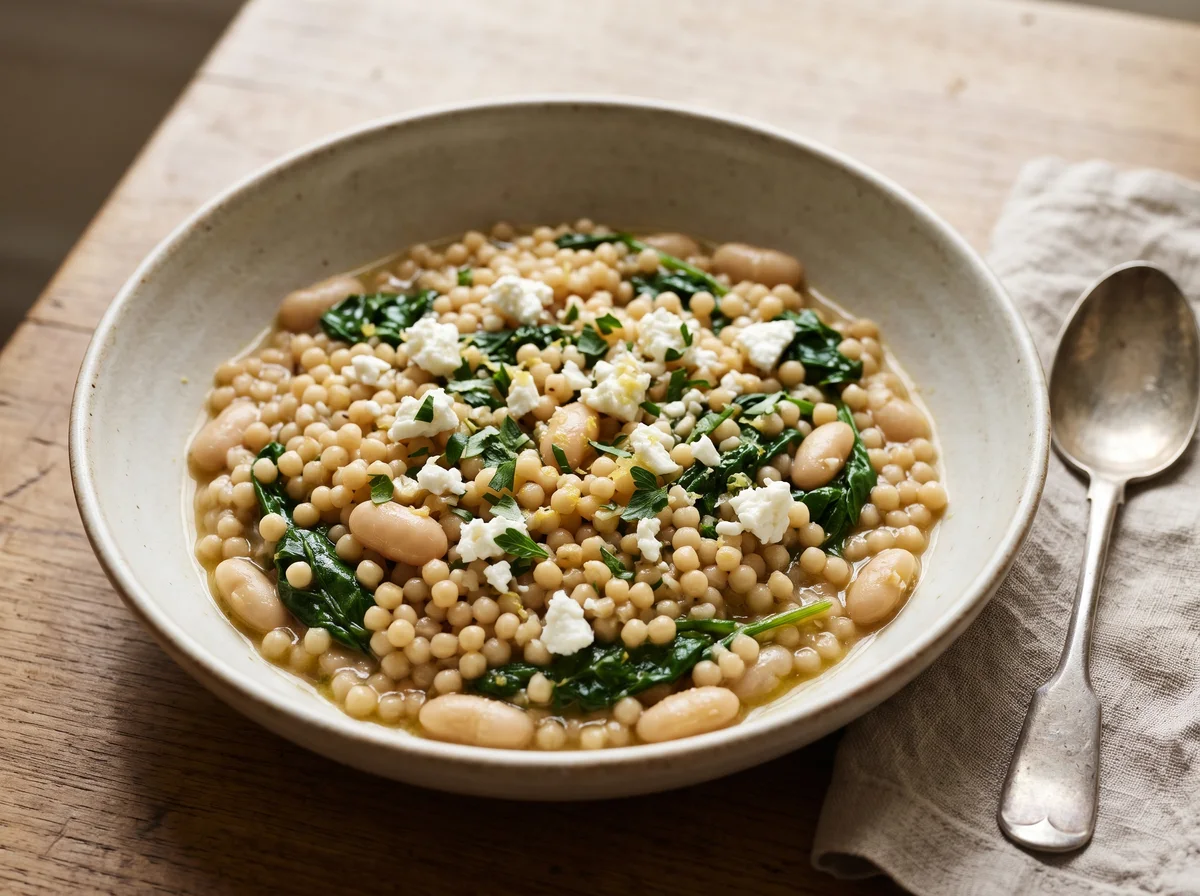
- Pearl couscous can handle heartier mix-ins like roasted vegetables, beans, or chunks of feta.
Season early, then finish with bright ingredients
Couscous tastes best when the cooking liquid is seasoned. A pinch of salt, a spoonful of broth, or a bay leaf in the liquid can do most of the work before you ever open the lid. After fluffing, taste again and adjust with olive oil, butter, lemon juice, black pepper, or chopped herbs.
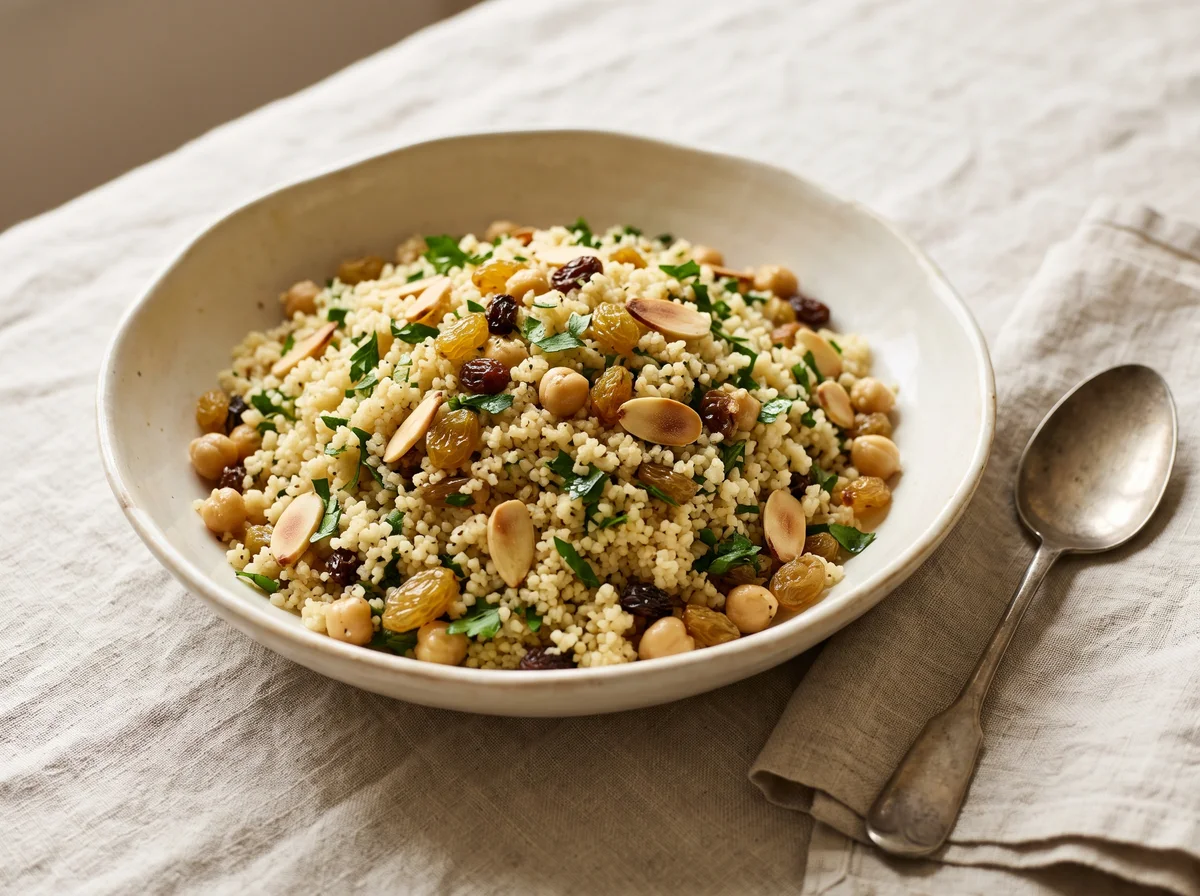
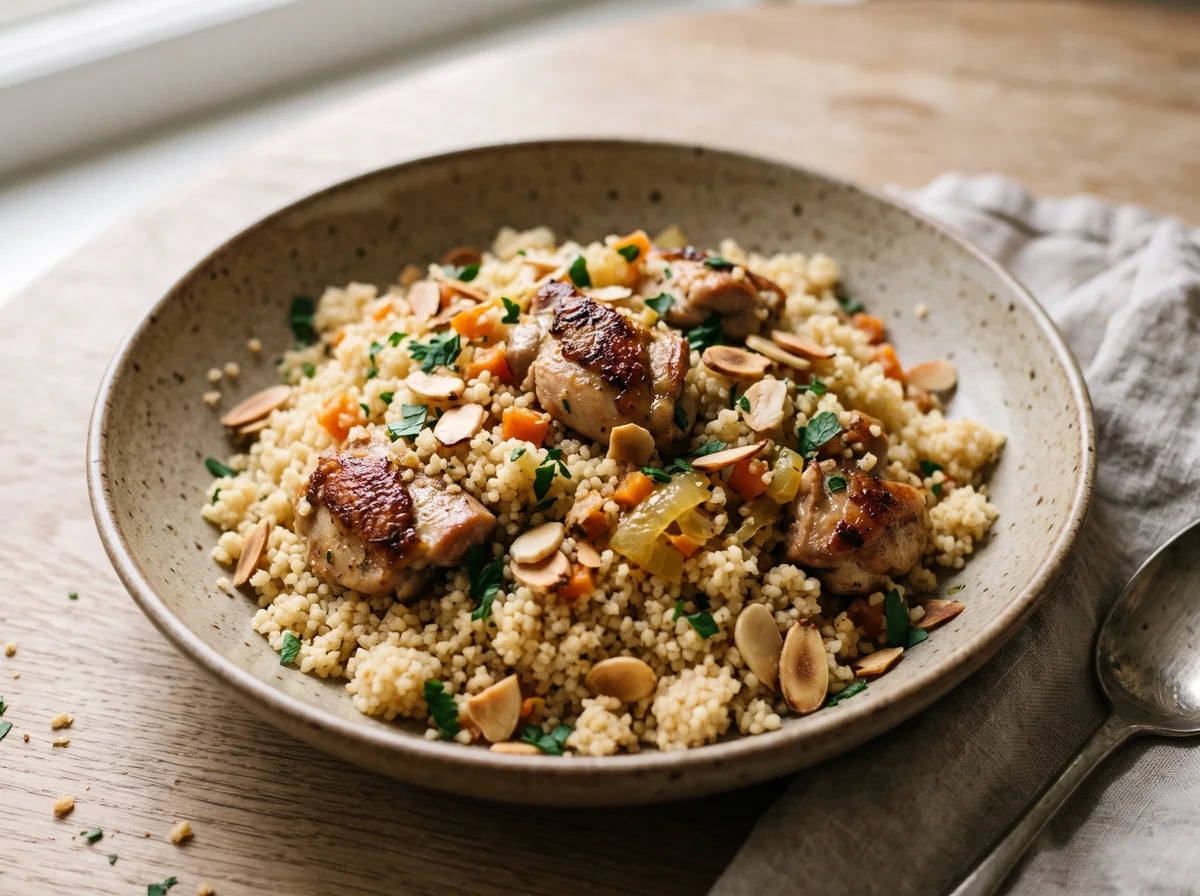
For savory bowls, think in layers. Toasted almonds, chickpeas, raisins, scallions, parsley, mint, or roasted carrots all work well. If you are serving couscous next to saucy dishes, keep the grains slightly richer and less acidic so they can soak up the sauce without tasting flat.
- For a salad, cool the couscous 10 to 15 minutes before adding feta or tender herbs.
- For a warm side, toss in butter and a squeeze of lemon right before serving.
- A little contrast helps: combine soft grains with something crunchy or juicy.
Common mistakes and quick fixes
The most common problem is using too much liquid. Regular couscous should not swim in water, and pearl couscous should not boil hard the whole time. If the result is mushy, spread it on a tray, fluff it, and let excess steam escape. If it is dry or chalky, add hot liquid in small splashes and cover briefly.
Another mistake is overmixing. Stirring hard can turn fluffy couscous into a paste, especially if you try to handle it before it has absorbed the liquid. Use a fork, make broad lifting motions, and stop as soon as the grains separate. If it tastes bland, salt the liquid next time instead of trying to rescue it only at the end.
- Mushy: too much liquid or too much heat. Fix by airing it out briefly.
- Dry in spots: not enough liquid or not enough rest. Fix with a splash of hot water and another short cover.
- Bland: underseasoned cooking liquid. Fix with salt, butter, herbs, or a flavored broth.
Store couscous safely and reheat without drying it out
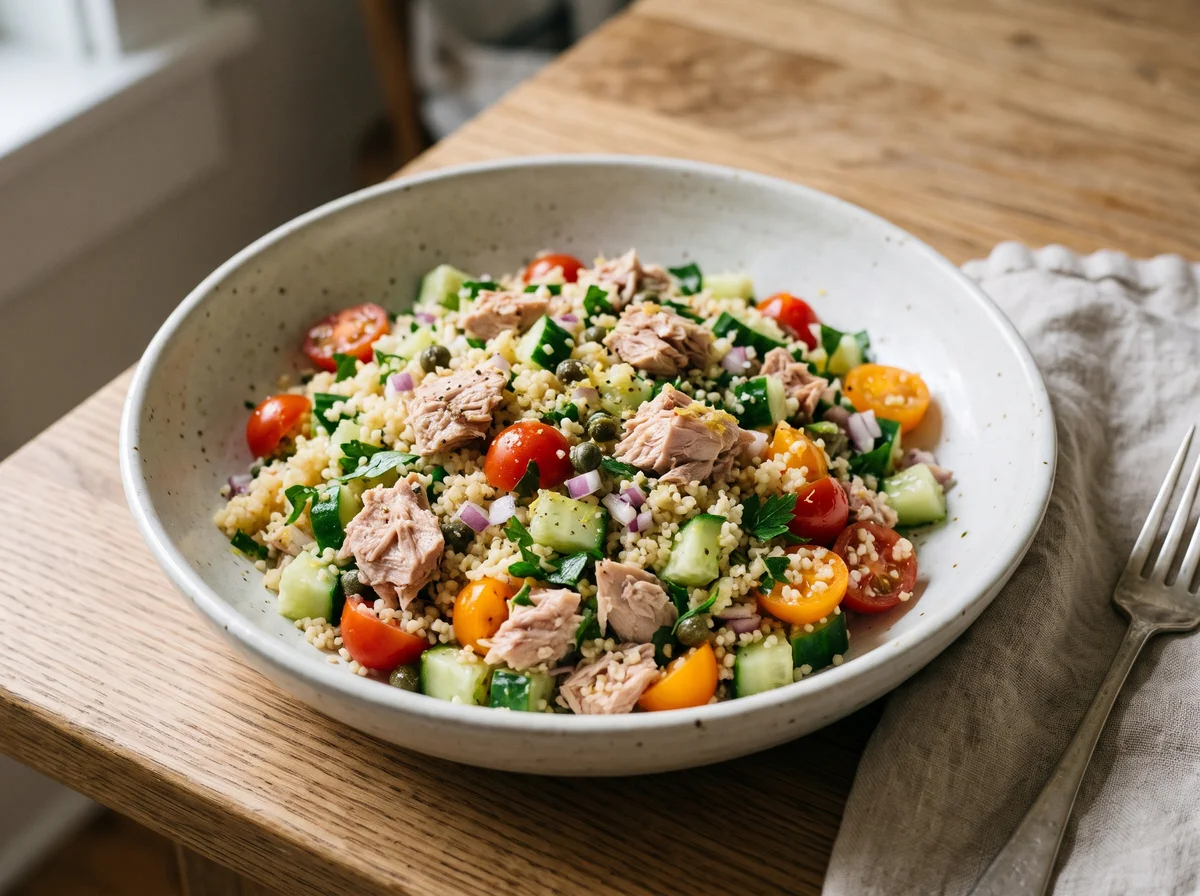
Cool cooked couscous promptly and refrigerate it within 2 hours, or within 1 hour if the room is above 90 F. Put it into a shallow container so it cools faster, then keep it in the refrigerator at 40 F or below. Use leftovers within 3 to 4 days, especially if the couscous has been mixed with vegetables, dairy, seafood, or cooked meat.
To reheat, sprinkle on a teaspoon or two of water or broth, cover loosely, and warm it in the microwave or in a skillet over low heat until steaming hot. Fluff again before serving. If you are making a salad, cold couscous straight from the fridge is fine; just refresh it with lemon, oil, or dressing after it loosens up.
Sources: FoodSafety.gov: Four steps to food safetyFoodSafety.gov: Cold storage chart
Common questions
Is couscous cooked like rice?
Regular couscous is not simmered for long like rice. It is usually soaked in boiling liquid off the heat, then fluffed. Pearl couscous is closer to pasta and is simmered on the stove.
Can I make couscous with broth instead of water?
Yes. Broth adds flavor and works well for both regular and pearl couscous. Taste first, though, because some broths are salty enough that you may want less added salt.
Why did my couscous turn out gummy?
Usually it had too much liquid, was stirred too much, or was cooked too hard. Try a shorter rest, fluff with a fork, and keep pearl couscous at a gentle simmer instead of a boil.