What makes a good poached egg
Poaching works best when the water is calm enough to support the egg, but active enough to help the white set without spreading too far. Fresh eggs usually hold their shape better. Older eggs can still poach, but the whites tend to feather out.
Use a medium saucepan or deep skillet, a slotted spoon, a small bowl or ramekin for cracking, and a timer. A paper towel-lined plate nearby makes draining easy. If you are cooking more than two eggs, choose the widest pan you have so they do not crowd each other.
- 1 medium saucepan or deep skillet
- 1 slotted spoon
- 1 small bowl or ramekin
- Timer
- Paper towels or a clean kitchen towel
Set up the water correctly
Fill the pan with about 2 1/2 to 4 inches of water, enough to let the egg float without hitting the bottom. Bring it to a bare simmer over medium heat. You want tiny bubbles at the bottom of the pan, steam, and the occasional lazy ripple, not a rolling boil.
A small splash of vinegar, about 1 teaspoon per quart of water, can help the white set a little faster. It is optional and should not make the egg taste sour if you use a light hand. Skip the salt in the water. It is unnecessary here and can make the water cloudier.
- Bare simmer, not a boil
- Optional vinegar: 1 teaspoon per quart of water
- Do not salt the poaching water
Poach the egg step by step
Crack each egg into a small bowl first. This gives you control and lets you remove any shell before it hits the water. If the white looks very loose, let the egg sit for a moment in the bowl so some of the thinnest white settles, or strain it through a fine-mesh sieve for a neater result.
Lower the bowl to the surface of the water and slide the egg in gently. For a single egg, you can stir the water once to make a shallow whirlpool, then drop the egg into the center. For several eggs, keep the water still and add them one at a time around the edge of the pan. After the egg goes in, do not stir it for the first 20 to 30 seconds. Once the white starts to turn opaque, it will hold together on its own.
- Crack eggs into a cup first
- Use a gentle swirl only for one egg at a time
- Leave the egg alone for the first 20 to 30 seconds
Know when to lift the egg
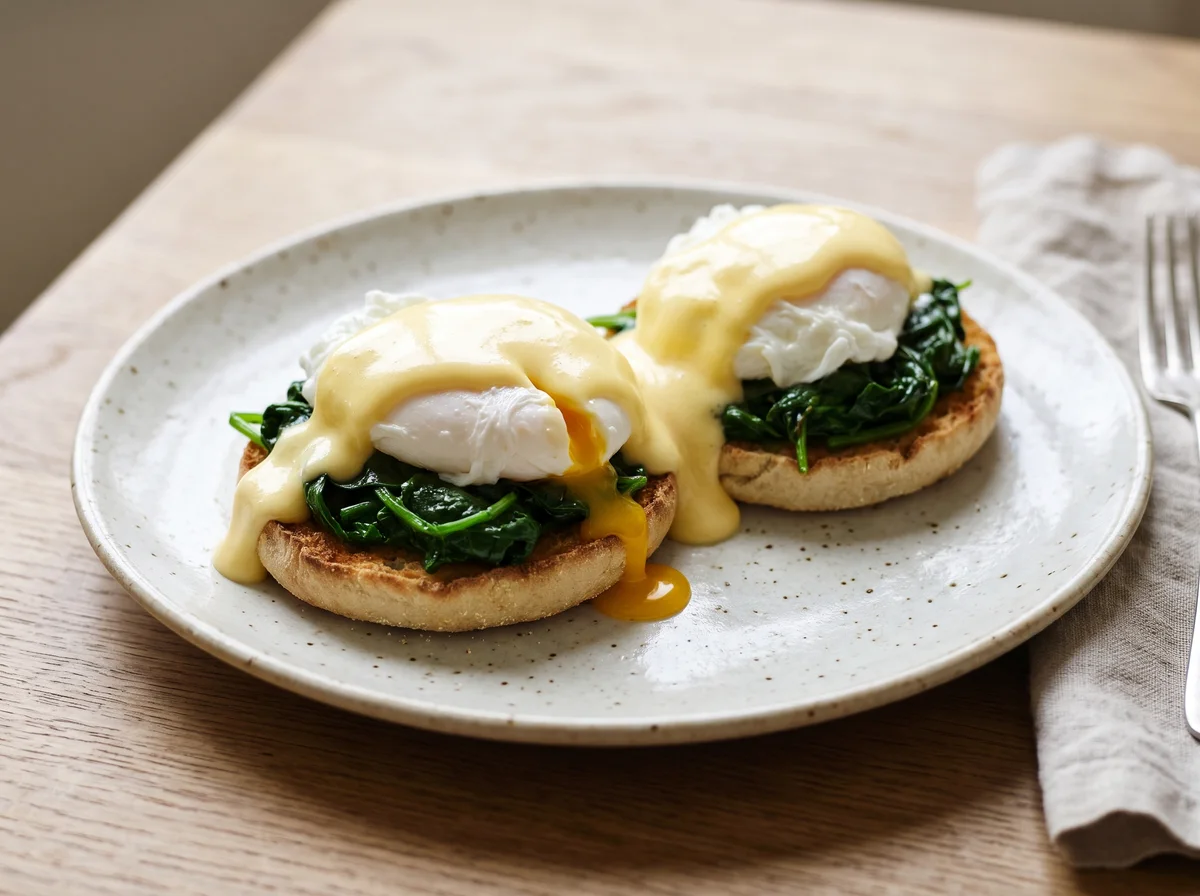
Timing depends on egg size, starting temperature, and how gently your water is moving, so use the clock as a guide, not a command. The egg is ready when the white is opaque and set, and the yolk still feels soft under a light touch. If you want a neater oval, you can trim wispy edges with the spoon as you lift it out.
Lift the egg with the slotted spoon and let it drain for a few seconds before serving. If you are poaching several eggs for a brunch platter, keep them moving through the kitchen and serve them right away rather than holding them for long in hot water, which can overcook the yolks.
| Time | What you should see | Best use |
|---|---|---|
| 2 1/2 to 3 minutes | White is set, yolk is very loose | Toast, grain bowls, soft centers |
| 3 to 4 minutes | White is set and yolk is soft | Most sandwiches and brunch plates |
| 4 to 5 minutes | Yolk is thicker but still tender | If you want a firmer center |
Fix common poaching problems
Most poaching mistakes come from heat that is either too aggressive or too timid. If the white spreads into lacy strands, the water was likely too hot, the egg was too old, or you dropped it from too high above the surface. If the egg sticks to the bottom, the water is too shallow or not hot enough to release the white quickly.
If the egg looks flat, the pan may be crowded. Poach in smaller batches so each egg has room. If the yolk turns chalky or the white feels rubbery, reduce the cooking time next round by 30 seconds. Once you learn the look of a properly poached egg, you will start recognizing the point where it should come out before it looks finished on the plate.
- Ragged whites: use fresher eggs and lower heat
- Stringy wisps: strain the thin white first
- Flat eggs: do not crowd the pan
- Rubbery whites: shorten the cooking time
Serve it hot, then store smartly
A poached egg is best served right away, drained well, and seasoned at the table. Salt, pepper, chili crisp, herbs, hollandaise, or a swipe of yogurt all work. It is especially good on toast, roasted vegetables, greens, potatoes, or grain bowls where the yolk can become part of the sauce.
If you need to make poached eggs ahead, cool them quickly and refrigerate them promptly. Get them into the fridge within 2 hours, or within 1 hour if the room is above 90 F, and keep the refrigerator at 40 F or below. Use within 3 to 4 days. Reheat leftovers to 165 F. If you prefer a runny center, use pasteurized eggs; if you are cooking for people who need fully cooked eggs, serve a fully set egg dish instead.
Sources: FoodSafety.gov: Four steps to food safetyFoodSafety.gov: Safe minimum internal temperaturesFoodSafety.gov: Cold storage chart
Common questions
Can I poach eggs without vinegar?
Yes. Vinegar is optional. It can help the whites set a little faster, but fresh eggs and gentle heat matter more.
Why are my poached eggs ragged?
Usually the water is too hot, the egg is too old, or you dropped it in from too high. Use fresher eggs, lower the heat, and slide the egg close to the water surface.
How do I poach more than one egg at a time?
Use a wide pan, keep the water at a bare simmer, and add eggs one at a time with space between them. Avoid overcrowding, which makes them merge.