Fish and chips
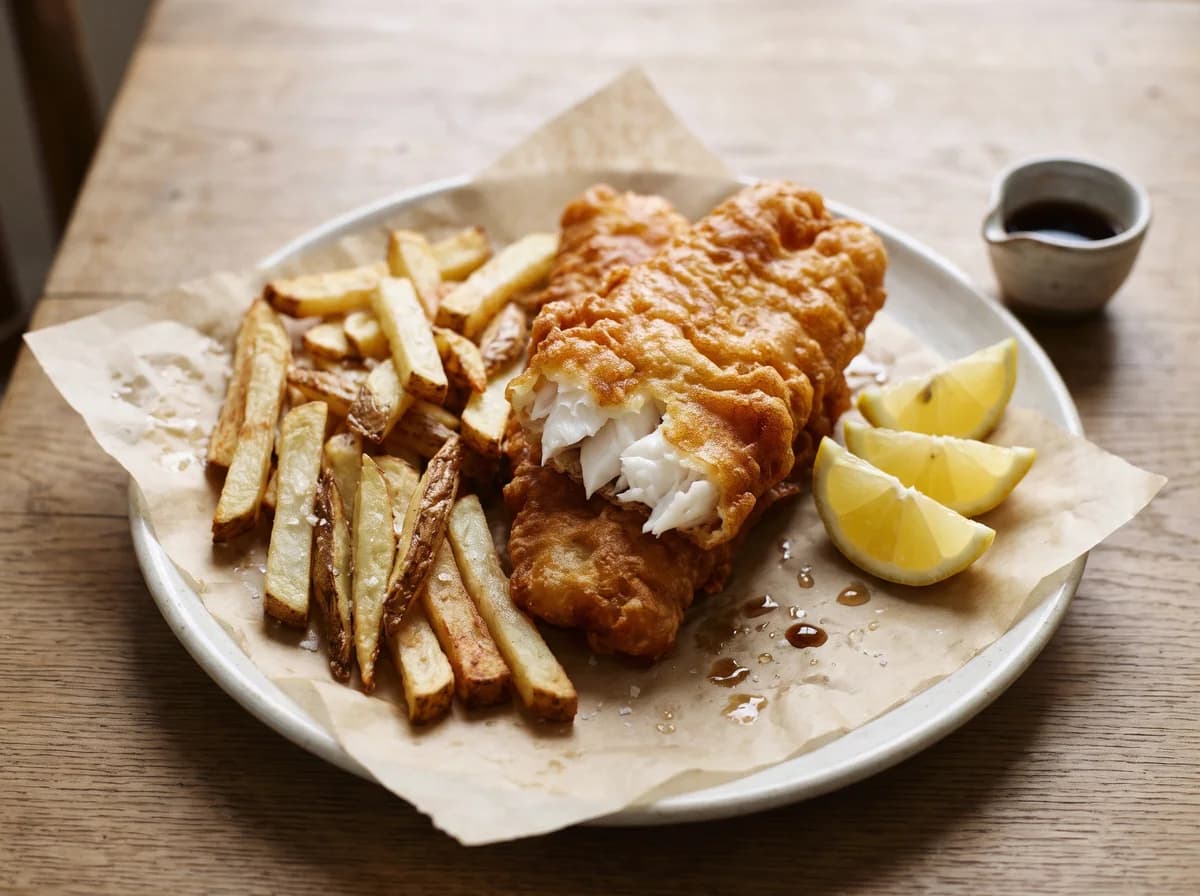
Classic fish and chips with crisp beer batter, chunky fried potatoes, and lemon-malt vinegar for serving. This recipe makes 2 generous dinner portions with flaky white fish and twice-fried chips, using a quick parboil so the potatoes turn fluffy inside and crisp outside without turning greasy.
Estimated calories and US ingredient costs.
This recipe is best made in small batches so the oil temperature does not crash. The frying oil amount is for safe depth in the pot, but the nutrition estimate counts only the oil likely eaten, not all of the oil in the pan. For 4 servings, use a larger Dutch oven or deep fryer and fry the fish in separate batches; do not crowd the pan. Keep the oven at 200 F only as a holding place for already-fried pieces, not as a substitute for hot oil. If you scale up, increase oil only to maintain a safe frying depth, not by a simple ingredient multiplier.
Your whole cook, in one place.
Ingredients, steps and a live timeline. Ready for 2 people.
Step timeline
Cooking order
10 leftParboil the chips
~10 min cookParboil the chips.
Put the potato batons, 4 cups cold water, and the distilled white vinegar in a medium saucepan.
Bring to a simmer over medium-high heat, then cook gently for 6 to 7 minutes until the outsides are just beginning to soften but the centers still hold their shape.
Drain well in a colander and let the potatoes steam-dry for 10 minutes so they fry up crisp instead of soggy.
Ingredients
- 1 total for recipePound russet potatoes
- 4 cupsCold water
Check the dish
After ~10 minCheck Fish and chips and continue when ready.
Make the batter
~10 minMake the batter.
In a medium bowl, whisk together 1 cup of the flour, the baking powder, 1/2 teaspoon of the salt, and the black pepper.
Whisk in the cold lager beer and the egg just until smooth.
A few small lumps are fine.
Set the batter aside for 10 minutes so the starch and bubbles settle into a lighter coating.
Ingredients
- 1 cupAll-purpose flour
- 1/2 teaspoonTeaspoon kosher salt
- 1/4Teaspoon black pepper
- 1 cupCold lager beer
- 1Large egg
Heat the oil and start the first fry
~5 minHeat the oil and start the first fry.
Pour the 6 cups neutral frying oil into a 6-quart Dutch oven or other deep heavy pot to a depth of about 2 inches.
Heat over medium-high to 350 F, using a thermometer if you have one.
Add the parboiled potatoes in batches and fry for 4 to 5 minutes, stirring once or twice, until pale and lightly set but not browned.
Lift out to a wire rack set over a sheet pan.
Ingredients
- 1 total for recipePound russet potatoes
- 6 cups total for recipeNeutral frying oil, such as canola or peanut oil
Prepare the fish
~1 minPrepare the fish.
Pat the white fish fillets very dry with paper towels and season both sides with the remaining 1/4 teaspoon salt.
Spread the remaining 1/2 cup flour on a plate.
Dredge each fillet lightly in flour, tapping off the excess, then hold them on a plate while the chips finish their first fry.
Do not reuse any flour or batter that has touched the raw fish.
Ingredients
- 1/2 cupAll-purpose flour
- 1/4Teaspoon kosher salt
Crisp the chips
~3 minCrisp the chips.
Raise the oil back to 375 F.
Return the potatoes to the hot oil and fry for 2 to 3 minutes until deep golden and crisp at the edges.
Transfer them to the wire rack and season immediately with a small pinch of salt while the surface oil is still hot.
Ingredients
- 3/4 total for recipeTeaspoon kosher salt
- 6 cups total for recipeNeutral frying oil, such as canola or peanut oil
Batter and fry the fish
~10 minBatter and fry the fish.
Dip one floured fillet into the batter, letting the excess drip off, then lower it carefully into the oil away from you.
Fry 4 to 5 minutes per side, depending on thickness, until the coating is deeply golden and the fish reaches 145 F at the thickest point.
If needed, fry the second fillet after the first comes out.
Keep the finished fish on the rack, not paper towels, so the crust stays crisp.
Serve hot
~120 min cookFor the best texture, salt the fish and chips only at the end and pour the vinegar over the chips at the table, not in the frying pan.
Chill any leftovers within 2 hours.
Ingredients
- 3/4 total for recipeTeaspoon kosher salt
Check the dish
After ~120 minCheck Fish and chips and continue when ready.
Serve meal
~1 minOnce all dishes are cooked and ready, plate and serve the meal together.
Fish and chips: Serve hot.
Fish and chips: Arrange the chips on plates, top with the fish,
Fish and chips: serve immediately with lemon wedges and malt vinegar.
Make the next one yours.
Create a custom meal with what you have.
Read the traditional recipe
Ingredients
For 2 people
- 1 pound russet potatoes, peeled and cut into 1/2-inch batons
- 4 cups cold water
- 1 tablespoon distilled white vinegar
- 1 1/2 cups all-purpose flour
- 1 teaspoon baking powder
- 3/4 teaspoon kosher salt
- 1/4 teaspoon black pepper
- 1 cup cold lager beer
- 1 large egg
- 1 pound skinless white fish fillets, such as cod or haddock, cut into 2 portions
- 6 cups neutral frying oil, such as canola or peanut oil
- 1 lemon, cut into wedges
- 2 tablespoons malt vinegar
Method
- Parboil the chipsPut the potato batons, 4 cups cold water, and the distilled white vinegar in a medium saucepan. Bring to a simmer over medium-high heat, then cook gently for 6 to 7 minutes until the outsides are just beginning to soften but the centers still hold their shape. Drain well in a colander and let the potatoes steam-dry for 10 minutes so they fry up crisp instead of soggy.
- Make the batterIn a medium bowl, whisk together 1 cup of the flour, the baking powder, 1/2 teaspoon of the salt, and the black pepper. Whisk in the cold lager beer and the egg just until smooth. A few small lumps are fine. Set the batter aside for 10 minutes so the starch and bubbles settle into a lighter coating.
- Heat the oil and start the first fryPour the 6 cups neutral frying oil into a 6-quart Dutch oven or other deep heavy pot to a depth of about 2 inches. Heat over medium-high to 350 F, using a thermometer if you have one. Add the parboiled potatoes in batches and fry for 4 to 5 minutes, stirring once or twice, until pale and lightly set but not browned. Lift out to a wire rack set over a sheet pan.
- Prepare the fishPat the white fish fillets very dry with paper towels and season both sides with the remaining 1/4 teaspoon salt. Spread the remaining 1/2 cup flour on a plate. Dredge each fillet lightly in flour, tapping off the excess, then hold them on a plate while the chips finish their first fry. Do not reuse any flour or batter that has touched the raw fish.
- Crisp the chipsRaise the oil back to 375 F. Return the potatoes to the hot oil and fry for 2 to 3 minutes until deep golden and crisp at the edges. Transfer them to the wire rack and season immediately with a small pinch of salt while the surface oil is still hot.
- Batter and fry the fishDip one floured fillet into the batter, letting the excess drip off, then lower it carefully into the oil away from you. Fry 4 to 5 minutes per side, depending on thickness, until the coating is deeply golden and the fish reaches 145 F at the thickest point. If needed, fry the second fillet after the first comes out. Keep the finished fish on the rack, not paper towels, so the crust stays crisp.
- Serve hotArrange the chips on plates, top with the fish, and serve immediately with lemon wedges and malt vinegar. For the best texture, salt the fish and chips only at the end and pour the vinegar over the chips at the table, not in the frying pan. Chill any leftovers within 2 hours.
Before you cook
What to get ready
Heavy pan suited to the recipe's frying depth, tongs, draining rack and thermometer.
Use a deep heavy pot with ample headroom, a frying thermometer and a rack; dry parboiled chips thoroughly.
If something needs adjusting
Batter falls away from fish
Dry the fillets, dust lightly with flour, then coat just before lowering carefully into oil.
Coating turns greasy
Avoid crowding and allow oil temperature to recover between batches. Dry food before coating and do not put wet utensils into hot oil.
Store for later
Refrigerate cooked food promptly and store sauce separately. Reheat to 165°F in an oven for a firmer coating; fried food loses crispness in storage.
Refrigerate perishables within 2 hours, or 1 hour above 90°F. Keep the fridge at 40°F or below; use refrigerated leftovers within 3–4 days. USDA storage and reheating guidance.
Make the ingredients go further
Compare frozen white fish by usable weight; thaw and dry before battering.
Next use for your ingredients: Baked cod with tomatoes →
Calculate this meal with your own prices →
How to Use a Food Thermometer →
Cooking notes updated October 24, 2026. How we create recipes.
Tips, swaps and questions
A little kitchen know-how
Keep the batter cold and the oil hot. Cold batter helps the coating puff and set quickly, while steady frying temperature prevents greasy fish. If the oil drops below 340 F, pause and let it recover before adding the next batch. A wire rack matters here because trapped steam softens the crust fast.
Make it work for you
If you cannot find lager, use ice-cold sparkling water in place of the beer for a lighter, more delicate crust. For the fish, pollock or hake works well if it is skinless and cut into similar portions. Avoid very thin fillets, which cook too quickly and can dry out before the batter turns deep golden.
Use more of your all-purpose flour and egg in coconut shrimp.
How do I keep fish and chips crisp instead of soggy?
Dry the potatoes after parboiling, fry them twice, and keep them on a wire rack so steam can escape. For the fish, pat it dry before flouring, then fry in oil that stays around 350 to 375 F. Add salt only at the end, because salt pulls moisture to the surface and softens the crust.
Times are estimates. Check ingredients for allergens. For safe temperatures and storage, see FoodSafety.gov.