Coconut shrimp
Crisp coconut shrimp with a sweet chili-lime dip. This recipe makes 12 breaded shrimp for 2 servings, with a crunchy panko-coconut crust that fries quickly in a shallow layer of oil. The coating stays light and shattery if you press it on firmly and let it set before frying.
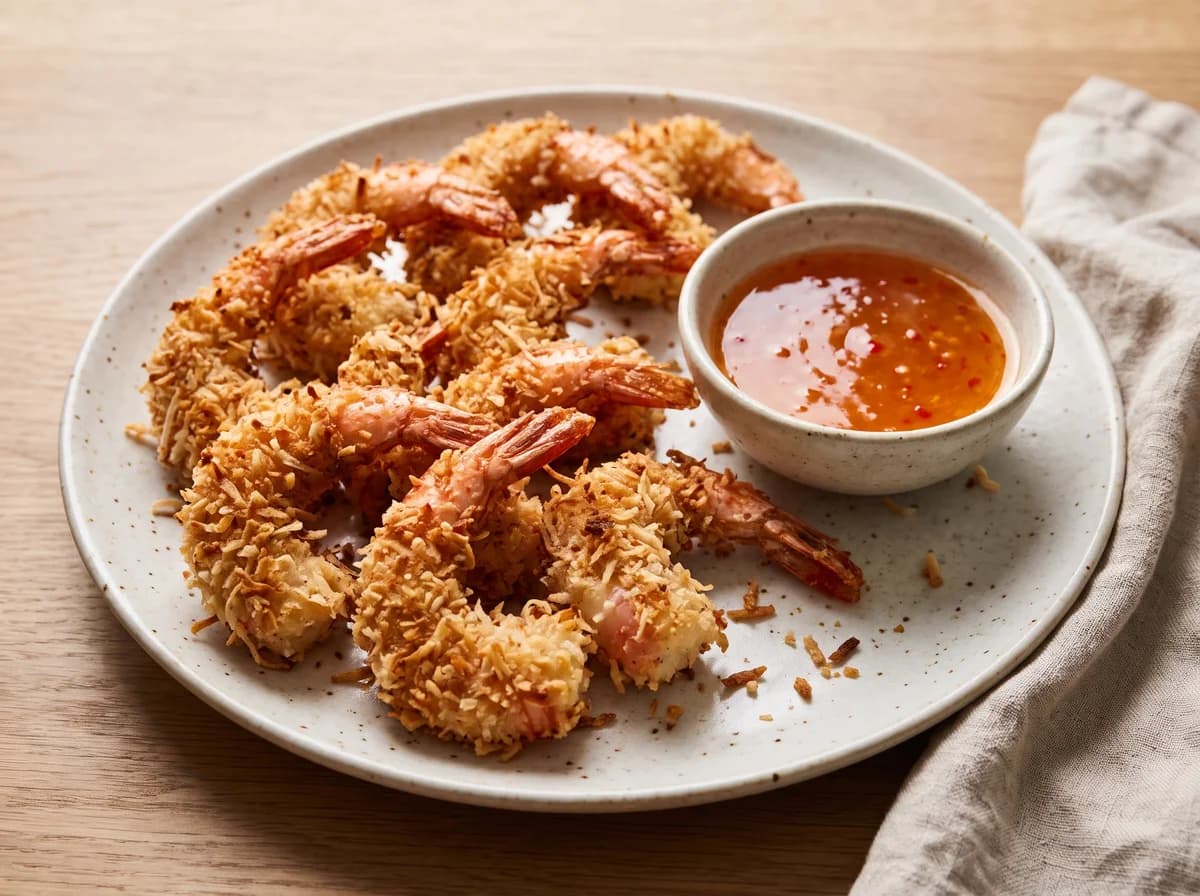
Estimated calories and US ingredient costs.
For a double batch, use two skillets or fry in four smaller batches so the oil temperature stays steady. Do not scale the heat or frying time much higher; instead, keep the shrimp in a single layer and watch the color closely because coconut browns faster than plain breadcrumb coating. Oil calories are estimated from about 1 tbsp absorbed per batch, not from all oil left in the pan.
Your whole cook, in one place.
Ingredients, steps and a live timeline. Ready for 2 people.
Step timeline
Cooking order
10 leftMake the dipping sauce
~4 minMake the dipping sauce.
In a small bowl, stir together the 1/3 cup sweet chili sauce and 1 tbsp lime juice until smooth.
Set aside while you bread and fry the shrimp.
Ingredients
- 12 total for recipeLarge shrimp, deveined, and patted dry
- 1/3 cupSweet chili sauce
- 1 tbspBottled lime juice
Set up the breading station
~4 minSet up the breading station.
Place the 1/3 cup flour in a shallow bowl and season it with the 1/2 tsp kosher salt and 1/4 tsp black pepper.
In a second bowl, whisk the 1 large egg with 1 tbsp water until fully blended.
In a third bowl, mix the 1 cup shredded coconut and 1/2 cup panko so the coating fries evenly.
Ingredients
- 1/2 tspKosher salt
- 1/4 tspBlack pepper
- 1/3 cupAll-purpose flour
- 1Large egg
- 1 tbspWater
- 1/2 cupPanko breadcrumbs
Coat the shrimp
~3 minCoat the shrimp.
Working with one shrimp at a time, dredge it in the seasoned flour, shaking off the excess.
Dip it into the egg mixture, letting the excess drip back into the bowl, then press it into the coconut-panko mixture so the entire surface is coated.
Discard any leftover flour, egg, or crumbs that touched raw shrimp; do not reuse them.
Ingredients
- 12 total for recipeLarge shrimp, deveined, and patted dry
- 1/3 cup total for recipeAll-purpose flour
Let the coating set
~10 min cookLet the coating set.
Leave the coated shrimp at room temperature for 10 minutes.
This short rest helps the flour and egg hydrate, which makes the coconut crust adhere better and reduces patchy spots when the shrimp hit the oil.
Ingredients
- 12 total for recipeLarge shrimp, deveined, and patted dry
- 2 tbsp total for recipeNeutral oil
Check shrimp
After ~10 minCheck Coconut shrimp and continue when ready.
Heat the pan
~2 minHeat the pan.
Set a 12-inch skillet over medium heat and add the 2 tbsp neutral oil.
Warm the oil for about 2 minutes until it shimmers and a breadcrumb dropped in the pan sizzles immediately.
If the oil smokes, lower the heat before frying.
Ingredients
- 2 tbspNeutral oil
Fry in batches
~6 minFry in batches.
Add half the shrimp to the skillet in a single layer and fry for 2 to 3 minutes per side, turning once with tongs, until the coconut is deep golden brown and the shrimp are opaque and firm.
For food safety, the shrimp should reach 145 F in the center if you check with an instant-read thermometer.
Avoid crowding, which lowers the oil temperature and softens the crust.
Transfer the finished shrimp to a wire rack, then fry the remaining shrimp the same way.
Ingredients
- Half of 12Large shrimp, deveined, and patted dry
Check for doneness and drain briefly
~2 minCheck for doneness and drain briefly.
The shrimp are done when they curl into a loose C-shape and the centers are no longer translucent.
Because shrimp cook quickly, pull them from the pan as soon as the coating is browned and the flesh is opaque; overcooking makes them rubbery.
Let excess oil drain for 1 to 2 minutes.
Ingredients
- 12 total for recipeLarge shrimp, deveined, and patted dry
- 2 tbsp total for recipeNeutral oil
Serve hot
~3 minSpoon a little sauce alongside each portion rather than soaking the shrimp, which keeps the crust crisp longer.
Ingredients
- 12 total for recipeLarge shrimp, deveined, and patted dry
Serve meal
~1 minOnce all dishes are cooked and ready, plate and serve the meal together.
Coconut shrimp: Arrange the breaded shrimp on a plate or sheet pan in a single layer.
Coconut shrimp: Serve hot.
Coconut shrimp: Arrange the coconut shrimp on plates
Coconut shrimp: serve immediately with the sweet chili-lime dip on the side.
Make the next one yours.
Create a custom meal with what you have.
Read the traditional recipe
Ingredients
For 2 people
- 12 large shrimp, peeled, deveined, and patted dry
- 1/2 tsp kosher salt
- 1/4 tsp black pepper
- 1/3 cup all-purpose flour
- 1 large egg
- 1 tbsp water
- 1 cup unsweetened shredded coconut
- 1/2 cup panko breadcrumbs
- 2 tbsp neutral oil
- 1/3 cup sweet chili sauce
- 1 tbsp bottled lime juice
Method
- Make the dipping sauceIn a small bowl, stir together the 1/3 cup sweet chili sauce and 1 tbsp lime juice until smooth. Set aside while you bread and fry the shrimp.
- Set up the breading stationPlace the 1/3 cup flour in a shallow bowl and season it with the 1/2 tsp kosher salt and 1/4 tsp black pepper. In a second bowl, whisk the 1 large egg with 1 tbsp water until fully blended. In a third bowl, mix the 1 cup shredded coconut and 1/2 cup panko so the coating fries evenly.
- Coat the shrimpWorking with one shrimp at a time, dredge it in the seasoned flour, shaking off the excess. Dip it into the egg mixture, letting the excess drip back into the bowl, then press it into the coconut-panko mixture so the entire surface is coated. Arrange the breaded shrimp on a plate or sheet pan in a single layer. Discard any leftover flour, egg, or crumbs that touched raw shrimp; do not reuse them.
- Let the coating setLeave the coated shrimp at room temperature for 10 minutes. This short rest helps the flour and egg hydrate, which makes the coconut crust adhere better and reduces patchy spots when the shrimp hit the oil.
- Heat the panSet a 12-inch skillet over medium heat and add the 2 tbsp neutral oil. Warm the oil for about 2 minutes until it shimmers and a breadcrumb dropped in the pan sizzles immediately. If the oil smokes, lower the heat before frying.
- Fry in batchesAdd half the shrimp to the skillet in a single layer and fry for 2 to 3 minutes per side, turning once with tongs, until the coconut is deep golden brown and the shrimp are opaque and firm. For food safety, the shrimp should reach 145 F in the center if you check with an instant-read thermometer. Avoid crowding, which lowers the oil temperature and softens the crust. Transfer the finished shrimp to a wire rack, then fry the remaining shrimp the same way.
- Check for doneness and drain brieflyThe shrimp are done when they curl into a loose C-shape and the centers are no longer translucent. Because shrimp cook quickly, pull them from the pan as soon as the coating is browned and the flesh is opaque; overcooking makes them rubbery. Let excess oil drain for 1 to 2 minutes.
- Serve hotArrange the coconut shrimp on plates and serve immediately with the sweet chili-lime dip on the side. Spoon a little sauce alongside each portion rather than soaking the shrimp, which keeps the crust crisp longer.
Before you cook
What to get ready
Heavy pan suited to the recipe's frying depth, tongs, draining rack and thermometer.
Dry shrimp and arrange flour, egg and coconut crumbs in separate dishes before coating.
If something needs adjusting
Coconut darkens before shrimp cooks
Lower the heat and use even-sized shrimp; coconut browns quickly and is not proof of doneness.
Coating turns greasy
Avoid crowding and allow oil temperature to recover between batches. Dry food before coating and do not put wet utensils into hot oil.
Store for later
Refrigerate cooked food promptly and store sauce separately. Reheat to 165°F in an oven for a firmer coating; fried food loses crispness in storage.
Refrigerate perishables within 2 hours, or 1 hour above 90°F. Keep the fridge at 40°F or below; use refrigerated leftovers within 3–4 days. USDA storage and reheating guidance.
Make the ingredients go further
Use remaining unsweetened coconut in energy bites.
Next use for your ingredients: Tahini energy bites →
Calculate this meal with your own prices →
How to Use a Food Thermometer →
Cooking notes updated October 24, 2026. How we create recipes.
Tips, swaps and questions
A little kitchen know-how
For the crispiest crust, keep the panko in the mix; an all-coconut coating can brown too fast before the shrimp cook through. The oil kcal here are estimated from about 1 tbsp absorbed during shallow frying, not from all 2 tbsp used in the pan.
Make it work for you
If you want a slightly lighter crust, replace half of the panko with finely crushed rice cereal, which browns quickly and stays crisp. If you need a gluten-free version, use a 1:1 gluten-free flour blend and gluten-free panko, but still fry in batches so the coating sets before the oil cools.
Use more of your egg and panko breadcrumbs in chicken patties with zucchini.
Can I bake coconut shrimp instead of frying it?
Yes, but the texture changes. Bake on a greased rack set over a sheet pan at 425 F until the shrimp are opaque and the coating is browned, usually about 10 to 12 minutes, turning once. The crust will be drier and less crunchy than shallow-fried coconut shrimp, so brush or spray the coating lightly with oil before baking.
Times are estimates. Check ingredients for allergens. For safe temperatures and storage, see FoodSafety.gov.