Kale chips
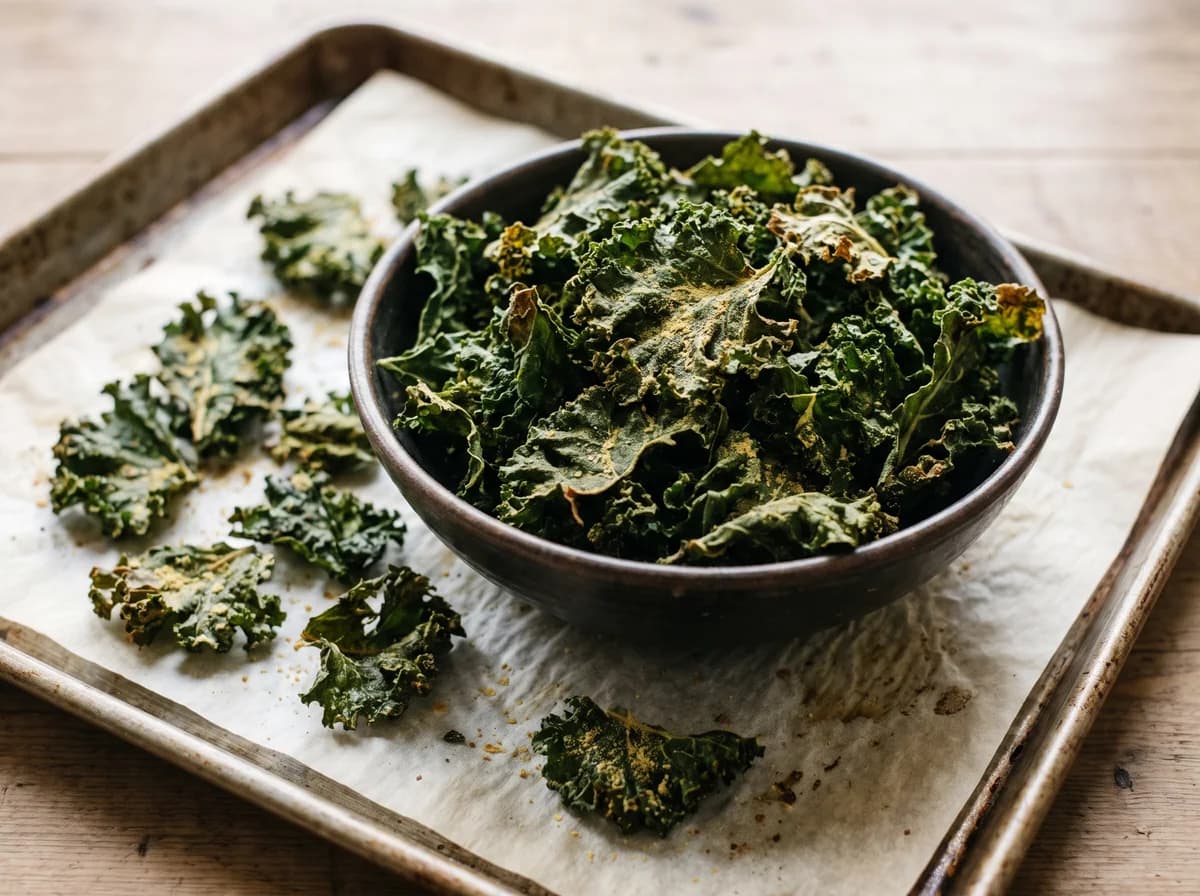
Crisp, savory kale chips with frilly edges and a light coating of oil, salt, garlic, and nutritional yeast. This small-batch recipe makes about 2 snack servings and bakes quickly on a sheet pan, with the main success factor being very dry leaves and a single even layer so the chips blister instead of steaming.
Estimated calories and US ingredient costs.
For a larger batch, use additional sheet pans and keep the leaves in a single layer; do not increase the oven temperature to shorten the bake. Kale chips need room and airflow more than heat. If doubling, rotate and swap pans halfway through so the chips on different racks dry evenly.
Your whole cook, in one place.
Ingredients, steps and a live timeline. Ready for 2 people.
Step timeline
Cooking order
9 leftHeat the oven and line the sheet
~3 minHeat the oven and line the sheet.
Set an oven rack in the middle position and heat the oven to 300 F.
Line 1 large rimmed baking sheet with parchment paper.
A lower temperature helps the kale dry out before the edges overbrown, which is the main difference between crisp chips and bitter, charred leaves.
Wash and dry the kale thoroughly
~3 minWash and dry the kale thoroughly.
Rinse the 8 oz kale leaves, then dry them very well.
A salad spinner works best, but you can also pat the leaves dry in a clean kitchen towel.
Strip away the thick stems, then tear the leaves into 2-inch pieces, keeping them fairly even so they bake at the same rate.
Ingredients
- 8 ozKale leaves, stems removed and torn into 2-inch pieces
Season the leaves evenly
~1 minSeason the leaves evenly.
Put the kale in a large bowl.
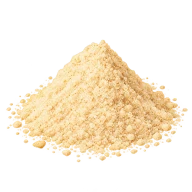
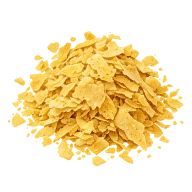
Drizzle with 2 tbsp olive oil, then add 1/2 tsp fine sea salt, 1/4 tsp garlic powder, and 2 tbsp nutritional yeast.
Use your hands to massage the seasoning into the leaves for about 1 minute, making sure every piece gets a thin sheen rather than a wet coating.
If puddles of oil collect in the bowl, the kale will fry unevenly and turn greasy.
Ingredients
- 8 oz total for recipeKale leaves, stems removed and torn into 2-inch pieces
- 2 tbspOlive oil
- 1/2 tspFine sea salt
- 1/4 tspGarlic powder
- 2 tbspNutritional yeast
Arrange in one layer
~2 minArrange in one layer.
Spread the seasoned kale on the prepared baking sheet in a single layer with a little space between pieces.
Use a second sheet if needed rather than crowding the pan.
Pieces piled on top of each other will steam, and overcrowding is the fastest way to end up with limp chips.
Ingredients
- 8 oz total for recipeKale leaves, stems removed and torn into 2-inch pieces
Bake until the edges dry out
~12 minBake until the edges dry out.
Bake for 6 minutes, then rotate the pan front to back.
If the kale has begun to shrink and the edges look slightly darker and drier, use tongs to flip the larger pieces once.
Keep baking for 4 to 6 minutes more, watching closely near the end.
The chips are ready when the stems feel dry and the leaves are crisp at the edges with only a little bend left in the thicker parts.
Cool to finish crisping
~8 min cookCool to finish crisping.
Remove the pan from the oven and let the kale chips sit on the baking sheet for 5 to 8 minutes.
They will crisp up further as they cool.
If any pieces still feel leathery, return them to the oven for 1 to 2 minutes only, checking carefully so the thin leaves do not burn.
Check the dish
After ~8 minCheck Kale chips and continue when ready.
Serve immediately
~2 minKale chips are best the day they are made, because trapped moisture softens them quickly once they sit.
Serve meal
~1 minOnce all dishes are cooked and ready, plate and serve the meal together.
Kale chips: Serve immediately.
Kale chips: Transfer the chips to a bowl or platter
Kale chips: serve right away while they are still crisp.
Make the next one yours.
Create a custom meal with what you have.
Read the traditional recipe
Ingredients
For 2 people
- 8 oz kale leaves, stems removed and torn into 2-inch pieces
- 2 tbsp olive oil
- 1/2 tsp fine sea salt
- 1/4 tsp garlic powder
- 2 tbsp nutritional yeast
Method
- Heat the oven and line the sheetSet an oven rack in the middle position and heat the oven to 300 F. Line 1 large rimmed baking sheet with parchment paper. A lower temperature helps the kale dry out before the edges overbrown, which is the main difference between crisp chips and bitter, charred leaves.
- Wash and dry the kale thoroughlyRinse the 8 oz kale leaves, then dry them very well. A salad spinner works best, but you can also pat the leaves dry in a clean kitchen towel. Strip away the thick stems, then tear the leaves into 2-inch pieces, keeping them fairly even so they bake at the same rate.
- Season the leaves evenlyPut the kale in a large bowl. Drizzle with 2 tbsp olive oil, then add 1/2 tsp fine sea salt, 1/4 tsp garlic powder, and 2 tbsp nutritional yeast. Use your hands to massage the seasoning into the leaves for about 1 minute, making sure every piece gets a thin sheen rather than a wet coating. If puddles of oil collect in the bowl, the kale will fry unevenly and turn greasy.
- Arrange in one layerSpread the seasoned kale on the prepared baking sheet in a single layer with a little space between pieces. Use a second sheet if needed rather than crowding the pan. Pieces piled on top of each other will steam, and overcrowding is the fastest way to end up with limp chips.
- Bake until the edges dry outBake for 6 minutes, then rotate the pan front to back. If the kale has begun to shrink and the edges look slightly darker and drier, use tongs to flip the larger pieces once. Keep baking for 4 to 6 minutes more, watching closely near the end. The chips are ready when the stems feel dry and the leaves are crisp at the edges with only a little bend left in the thicker parts.
- Cool to finish crispingRemove the pan from the oven and let the kale chips sit on the baking sheet for 5 to 8 minutes. They will crisp up further as they cool. If any pieces still feel leathery, return them to the oven for 1 to 2 minutes only, checking carefully so the thin leaves do not burn.
- Serve immediatelyTransfer the chips to a bowl or platter and serve right away while they are still crisp. Kale chips are best the day they are made, because trapped moisture softens them quickly once they sit.
Before you cook
What to get ready
Rimmed baking tray, mixing bowl, spatula and cooling rack.
Dry washed kale completely and remove thick stems before coating leaves lightly.
If something needs adjusting
Leaves are burnt at edges but soft inside
Spread in a single layer and remove crisp pieces as they finish; wet overlapping leaves cook unevenly.
Crunch fades in a closed container
Cool fully before covering so trapped steam does not soften the food. Make modest batches when crispness matters most.
Store for later
Cool fully and keep dry crisp snacks in an airtight container for texture. Refrigerate moist cooked chickpeas and use promptly; discard food showing spoilage rather than re-crisping it.
Make the ingredients go further
Use tender spare kale in ribollita rather than baking more chips than needed.
Next use for your ingredients: Ribollita →
Calculate this meal with your own prices →
How to Keep Roasted Vegetables Crisp →
Cooking notes updated October 24, 2026. How we create recipes.
Tips, swaps and questions
A little kitchen know-how
The most important step is drying the kale extremely well before oiling it. If the leaves are damp, the moisture turns to steam and softens the chips. For extra even browning, use two pans instead of crowding one, and pull out the smallest crisp pieces first if they finish before the larger ones.
Make it work for you
Swap nutritional yeast for 1/2 tsp smoked paprika plus 1/4 tsp black pepper for a more savory, peppery chip. If you use avocado oil instead of olive oil, the flavor will be milder and slightly less grassy, but the technique stays the same. Do not add cheese, which tends to brown too quickly at this temperature.
Use more of your garlic powder in roasted chickpeas.
Why did my kale chips turn soggy instead of crisp?
Sogginess usually comes from too much moisture or overcrowding. Dry the leaves very thoroughly after washing, coat them lightly rather than soaking them, and keep them in a single layer with space around each piece. If the chips sit too long after baking, they can also soften from trapped steam, so cool them briefly and eat them soon after.
Times are estimates. Check ingredients for allergens. For safe temperatures and storage, see FoodSafety.gov.