English muffins
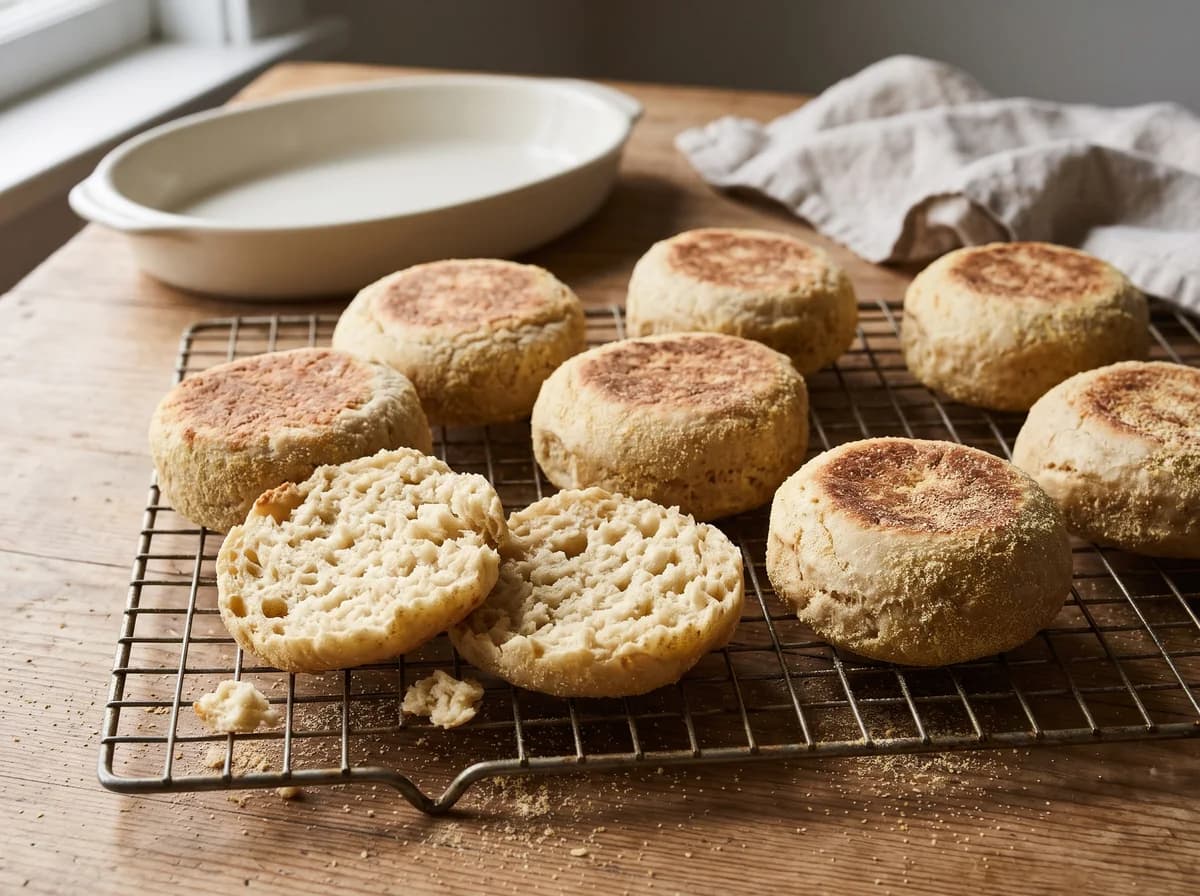
Tender, craggy homemade English muffins made with a lightly enriched yeast dough, cooked on a low skillet instead of baked. This recipe makes 8 muffins with the classic split interior and golden sides, ideal for toasting and topping.
Estimated calories and US ingredient costs.
This dough scales well to 12 or 16 muffins, but cook in batches so the skillet stays at a steady low heat. Use the same oven finish if any centers feel soft. For larger batches, keep shaped muffins on cornmeal-dusted sheet pans and cover them so they do not dry out while waiting.
Your whole cook, in one place.
Ingredients, steps and a live timeline. Ready for 8 people.
Step timeline
Cooking order
12 leftMix the dough
~5 minMix the dough.
In a large bowl, whisk together 3 cups bread flour, 2 tbsp granulated sugar, 1 tsp instant yeast, and 1 tsp fine salt.
In a separate bowl, whisk 1 cup whole milk, 1/2 cup warm water, 2 tbsp melted unsalted butter, and 1 large egg until smooth.
Pour the liquid into the dry ingredients and stir with a sturdy spoon until a shaggy, sticky dough forms and no dry flour remains.
Ingredients
- 3 cupsBread flour
- 1 cupWhole milk
- 1/2 cupWarm water
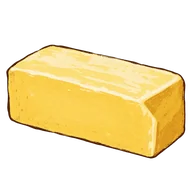
- 2 tbsp total for recipeUnsalted butter, melted
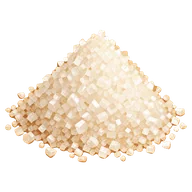
- 2 tbspGranulated sugar
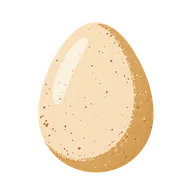
- 1Large egg
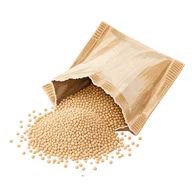
- 1 tspInstant yeast
- 1 tspFine salt
Knead briefly and strengthen
~5 minKnead briefly and strengthen.
Turn the dough onto a lightly floured counter and knead for 4 to 5 minutes, just until it becomes smoother and elastic.
It should still feel soft and slightly tacky.
If it tears easily, keep kneading a little longer; if it feels dry and stiff, work in 1 to 2 teaspoons of water.
Shape into a smooth ball.
First rise
~75 min cookFirst rise.
Lightly oil a clean bowl with 1/2 tbsp of the neutral oil and turn the dough in it to coat.
Cover and let it rise at warm room temperature for about 60 to 75 minutes, until noticeably puffed and about doubled.
The dough should look aerated and spring back slowly when gently pressed.
Ingredients
- 1/2 tbspNeutral oil

Check the dish
After ~75 minCheck English muffins and continue when ready.
Shape and cornmeal the muffins
~15 minShape and cornmeal the muffins.
Punch down the dough
then divide it into 8 equal pieces.
Shape each piece into a tight ball, then flatten it into a thick disk about 3/4 inch high.
Scatter the 1 tbsp cornmeal on a tray and press both sides of each disk into the cornmeal so the surfaces are lightly coated.
Place the muffins on a cornmeal-dusted sheet pan, leaving space between them.
Ingredients
- 1 tbspCornmeal
Second rise
~35 min cookSecond rise.
Cover the shaped muffins loosely and let them rise for 25 to 35 minutes, until slightly puffy.
They should look lighter and feel aerated but still hold their shape.
This shorter proof helps the centers cook through without collapsing in the skillet.
Check the dish
After ~35 minCheck English muffins and continue when ready.
Cook slowly on a griddle
~16 minCook slowly on a griddle.
Heat a large cast-iron skillet, griddle, or heavy nonstick pan over very low heat and brush it lightly with the remaining 1/2 tbsp neutral oil.
Set in as many muffins as fit without crowding and cook for 6 to 8 minutes per side, pressing very gently with a spatula only if they are puffing unevenly.
The exteriors should be deep golden in spots and the centers should feel set when lightly pressed.
Ingredients
- 1/2 tbspNeutral oil
Finish the centers if needed
~5 minFinish the centers if needed.
Transfer the cooked muffins to a 325 F oven for 5 minutes if the centers seem underdone or if the griddle color is getting too dark before the middle cooks through.
This extra finish helps avoid gummy crumbs while keeping the crust tender.
Cool and split
~10 min cookCool and split.
Cool the muffins on a rack for at least 10 minutes before splitting.
Fork-split each muffin around the equator for the classic nooks-and-crannies texture, then toast
Check the dish
After ~10 minCheck English muffins and continue when ready.
Serve meal
~1 minOnce all dishes are cooked and ready, plate and serve the meal together.
English muffins: serve warm with butter, jam, or eggs.
Make the next one yours.
Create a custom meal with what you have.
Read the traditional recipe
Ingredients
For 8 people
- 3 cups bread flour
- 1 cup whole milk
- 1/2 cup warm water
- 2 tbsp unsalted butter, melted
- 2 tbsp granulated sugar
- 1 large egg
- 1 tsp instant yeast
- 1 tsp fine salt
- 1 tbsp cornmeal
- 1 tbsp neutral oil
Method
- Mix the doughIn a large bowl, whisk together 3 cups bread flour, 2 tbsp granulated sugar, 1 tsp instant yeast, and 1 tsp fine salt. In a separate bowl, whisk 1 cup whole milk, 1/2 cup warm water, 2 tbsp melted unsalted butter, and 1 large egg until smooth. Pour the liquid into the dry ingredients and stir with a sturdy spoon until a shaggy, sticky dough forms and no dry flour remains.
- Knead briefly and strengthenTurn the dough onto a lightly floured counter and knead for 4 to 5 minutes, just until it becomes smoother and elastic. It should still feel soft and slightly tacky. If it tears easily, keep kneading a little longer; if it feels dry and stiff, work in 1 to 2 teaspoons of water. Shape into a smooth ball.
- First riseLightly oil a clean bowl with 1/2 tbsp of the neutral oil and turn the dough in it to coat. Cover and let it rise at warm room temperature for about 60 to 75 minutes, until noticeably puffed and about doubled. The dough should look aerated and spring back slowly when gently pressed.
- Shape and cornmeal the muffinsPunch down the dough, then divide it into 8 equal pieces. Shape each piece into a tight ball, then flatten it into a thick disk about 3/4 inch high. Scatter the 1 tbsp cornmeal on a tray and press both sides of each disk into the cornmeal so the surfaces are lightly coated. Place the muffins on a cornmeal-dusted sheet pan, leaving space between them.
- Second riseCover the shaped muffins loosely and let them rise for 25 to 35 minutes, until slightly puffy. They should look lighter and feel aerated but still hold their shape. This shorter proof helps the centers cook through without collapsing in the skillet.
- Cook slowly on a griddleHeat a large cast-iron skillet, griddle, or heavy nonstick pan over very low heat and brush it lightly with the remaining 1/2 tbsp neutral oil. Set in as many muffins as fit without crowding and cook for 6 to 8 minutes per side, pressing very gently with a spatula only if they are puffing unevenly. The exteriors should be deep golden in spots and the centers should feel set when lightly pressed.
- Finish the centers if neededTransfer the cooked muffins to a 325 F oven for 5 minutes if the centers seem underdone or if the griddle color is getting too dark before the middle cooks through. This extra finish helps avoid gummy crumbs while keeping the crust tender.
- Cool and splitCool the muffins on a rack for at least 10 minutes before splitting. Fork-split each muffin around the equator for the classic nooks-and-crannies texture, then toast and serve warm with butter, jam, or eggs.
Before you cook
What to get ready
Mixing bowl, dough scraper, the specified loaf pan, griddle or covered baking pot, and cooling rack.
Keep dough soft and allow both rises; dust the cooking surface lightly with cornmeal.
If something needs adjusting
Outside browns but center is doughy
Cook more slowly and use the recipe's oven finish if needed; splitting one reveals whether the crumb has set.
Dough rises slower than expected
Judge expansion and feel rather than the clock alone. A cool room slows fermentation; very hot liquid can damage yeast.
Store for later
Cool completely before wrapping. Keep plain bread covered for short-term use and freeze sliced portions for longer storage; discard moldy bread rather than trimming the spot.
Make the ingredients go further
Freeze split muffins for eggs Florentine.
Next use for your ingredients: Eggs Florentine →
Calculate this meal with your own prices →
How to Tell When Dough Has Risen →
Cooking notes updated October 24, 2026. How we create recipes.
Tips, swaps and questions
A little kitchen know-how
For the best texture, keep the skillet heat low enough that the muffins color gradually. If they brown too quickly, the centers can stay doughy. Fork-splitting after cooling preserves the craggy interior that soaks up butter and jam better than a knife-cut surface.
Make it work for you
If you want a slightly richer muffin, replace up to 2 tablespoons of the milk with plain yogurt for a more tender crumb. Avoid swapping in all-purpose flour if you can, since bread flour gives the structure needed for the tall, airy interior and better griddle lift.
Use more of your bread flour and whole milk in sandwich bread.
Why are my English muffins dense instead of airy?
Dense muffins usually come from underproofing, too much flour during shaping, or griddle heat that is too high. The dough should stay soft and a little sticky, the second rise should make the disks visibly puffy, and the cooking should be gentle enough to let the centers set before the crust overbrowns.
Times are estimates. Check ingredients for allergens. For safe temperatures and storage, see FoodSafety.gov.