Pork vindaloo
A fiery, vinegar-bright pork vindaloo with tender cubes of shoulder, onions, garlic, and warm spices simmered into a glossy red gravy. This version keeps the classic sweet-sour profile and actual vindaloo technique: a spice paste is ground with vinegar, then the pork is marinated before cooking. Serve it as a saucy stew over rice, with about 2 generous servings.
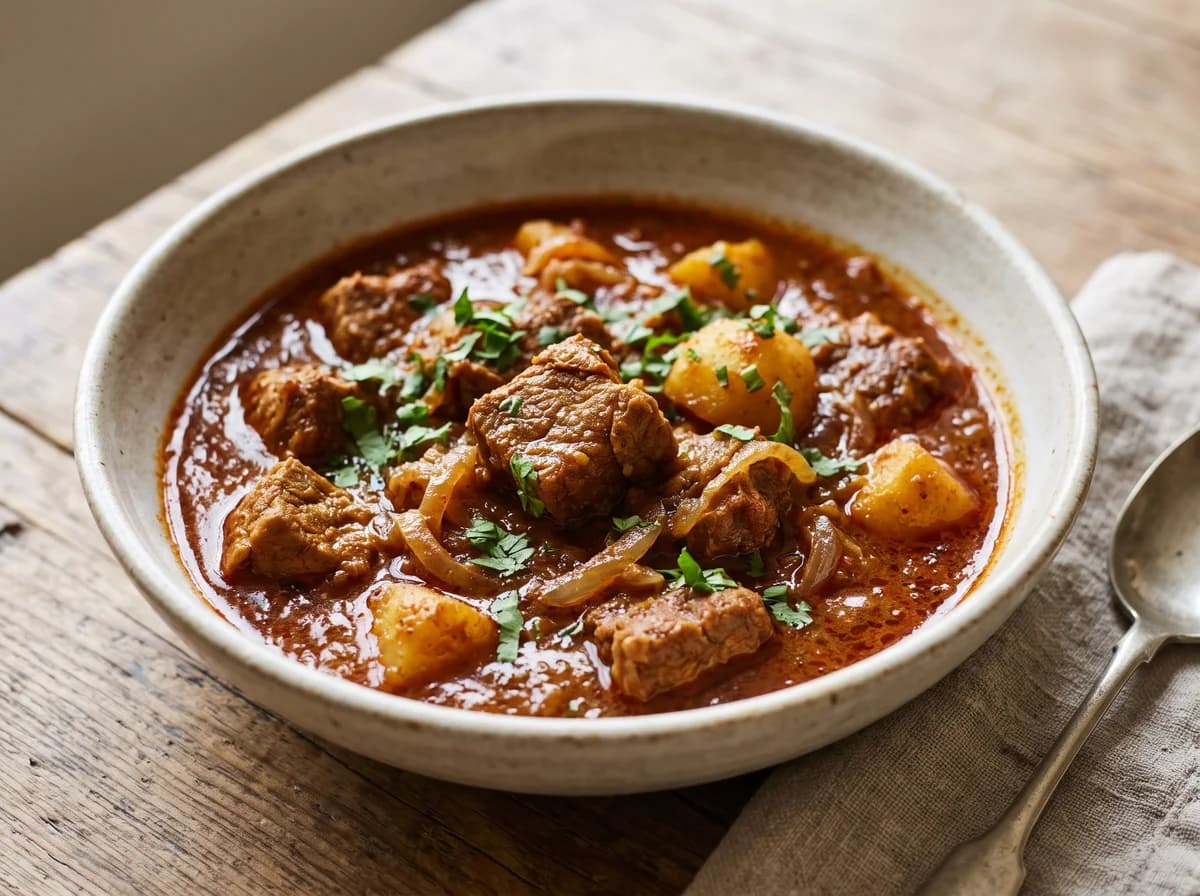
Estimated calories and US ingredient costs.
This recipe scales best by keeping the same pan size-to-volume ratio. For 4 servings, use a 12-inch skillet or Dutch oven and brown in batches; for 6 or more, use a larger Dutch oven rather than increasing the heat. Do not scale the cook time linearly, since browning and reduction depend on pan surface area.
Your whole cook, in one place.
Ingredients, steps and a live timeline. Ready for 2 people.
Step timeline
Cooking order
10 leftMake the vindaloo paste
~120 min cookMake the vindaloo paste.
In a medium bowl, stir together the vinegar, tomato paste, paprika, cumin, coriander, turmeric, black pepper, cayenne, salt, ginger, and garlic until you have a thick, red-brown paste.
Coat the pork shoulder cubes thoroughly, pressing the paste into the meat.
Cover and refrigerate for at least 2 hours so the vinegar seasons the pork and the spices cling before cooking.
Ingredients
- 1 1/4 lb total for recipePork shoulder
- 1 tbspTomato paste
- 1 tbspFresh ginger
- 4 tspGarlic
- 1 tbspPaprika
- 1 tspGround cumin
- 1 tspGround coriander
- 1/2 tspGround turmeric
- 1/2 tspGround black pepper
- 1/2 tspFine salt
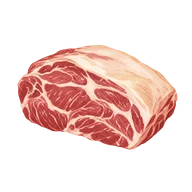



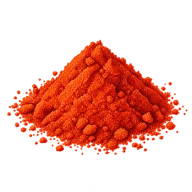
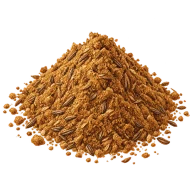


Check pork
After ~120 minCheck Pork vindaloo and continue when ready.
Brown the pork
~7 minBrown the pork.
Set a 10-inch heavy skillet or Dutch oven over medium-high heat and add the neutral oil.
When the oil shimmers, add the marinated pork in a single layer, shaking off only the excess paste that would burn in the pan.
Brown for 5 to 7 minutes, turning the pieces a few times so some edges caramelize.
Do this in batches if the pan looks crowded; crowding will steam the pork instead of browning it.
Ingredients
- 1 1/4 lb total for recipePork shoulder
- 2 tbsp total for recipeNeutral oil

Soften the onions
~8 minSoften the onions.
Reduce the heat to medium and add the sliced onion to the same pan.
Cook for 6 to 8 minutes, stirring often, until the onion turns translucent and picks up deep golden edges.
If the pan seems dry, add 1 to 2 tablespoons of water and scrape up the browned bits from the bottom; those bits help build the sauce.
Ingredients
- 1 total for recipeMedium yellow onion
- 2 tablespoonsWater


Simmer into gravy
~25 minSimmer into gravy.
Return all of the pork and any juices to the pan.
Stir in the 1/2 cup water and bring the liquid to a lively simmer.
Cover, lower the heat to medium-low, and cook for 25 minutes, stirring once or twice so the spice paste does not stick.
The pork should be at least 145 F in the center and beginning to soften by the end of this stage.
Ingredients
- 1/2 cupWater
Add the potato
~18 minAdd the potato.
Uncover the pan and add the potato cubes, stirring to coat them in the sauce.
Simmer uncovered for 15 to 18 minutes, stirring occasionally, until the potato is tender and the pork is fully fork-tender.
The sauce should cling to the pork in a glossy layer.
If the gravy thickens before the potato is done, splash in 2 to 3 tablespoons of water at a time and keep simmering.
Ingredients
- 1 1/4 lb total for recipePork shoulder
- 3 tablespoonsWater
- 4 oz total for recipeRusset potato

Finish and balance
~2 minFinish and balance.
Taste a spoonful of sauce and adjust the consistency by simmering 1 to 2 minutes longer if it seems loose.
The finished vindaloo should be thick enough to coat the back of a spoon without looking dry, with a sharp vinegar note balanced by warm spices.
Remove from the heat and stir in the chopped cilantro.
Ingredients
- 2 tbspCilantro
Plate hot
~120 min cookLet the vindaloo stand off the heat for 5 minutes so the sauce settles
then spoon it into warm bowls.
Refrigerate leftovers within 2 hours and keep them for 3 to 4 days; reheat to 165 F before serving.
Check pork
After ~120 minCheck Pork vindaloo and continue when ready.
Serve meal
~1 minOnce all dishes are cooked and ready, plate and serve the meal together.
Pork vindaloo: Plate hot.
Pork vindaloo: Serve it hot with rice or flatbread, making sure each portion gets both pork and potatoes plus plenty of sauce.
Make the next one yours.
Create a custom meal with what you have.
Read the traditional recipe
Ingredients
For 2 people
- 1 1/4 lb pork shoulder, cut into 1-inch cubes
- 2 tbsp distilled white vinegar
- 1 tbsp tomato paste
- 1 medium yellow onion, thinly sliced (about 6 oz)
- 1 tbsp fresh ginger, minced
- 4 tsp garlic, minced
- 1 tbsp paprika
- 1 tsp ground cumin
- 1 tsp ground coriander
- 1/2 tsp ground turmeric
- 1/2 tsp ground black pepper
- 1/4 tsp cayenne pepper
- 1/2 tsp fine salt
- 2 tbsp neutral oil
- 1/2 cup water
- 4 oz russet potato, peeled and cut into 3/4-inch cubes
- 2 tbsp chopped cilantro
Method
- Make the vindaloo pasteIn a medium bowl, stir together the vinegar, tomato paste, paprika, cumin, coriander, turmeric, black pepper, cayenne, salt, ginger, and garlic until you have a thick, red-brown paste. Coat the pork shoulder cubes thoroughly, pressing the paste into the meat. Cover and refrigerate for at least 2 hours so the vinegar seasons the pork and the spices cling before cooking.
- Brown the porkSet a 10-inch heavy skillet or Dutch oven over medium-high heat and add the neutral oil. When the oil shimmers, add the marinated pork in a single layer, shaking off only the excess paste that would burn in the pan. Brown for 5 to 7 minutes, turning the pieces a few times so some edges caramelize. Do this in batches if the pan looks crowded; crowding will steam the pork instead of browning it.
- Soften the onionsReduce the heat to medium and add the sliced onion to the same pan. Cook for 6 to 8 minutes, stirring often, until the onion turns translucent and picks up deep golden edges. If the pan seems dry, add 1 to 2 tablespoons of water and scrape up the browned bits from the bottom; those bits help build the sauce.
- Simmer into gravyReturn all of the pork and any juices to the pan. Stir in the 1/2 cup water and bring the liquid to a lively simmer. Cover, lower the heat to medium-low, and cook for 25 minutes, stirring once or twice so the spice paste does not stick. The pork should be at least 145 F in the center and beginning to soften by the end of this stage.
- Add the potatoUncover the pan and add the potato cubes, stirring to coat them in the sauce. Simmer uncovered for 15 to 18 minutes, stirring occasionally, until the potato is tender and the pork is fully fork-tender. The sauce should cling to the pork in a glossy layer. If the gravy thickens before the potato is done, splash in 2 to 3 tablespoons of water at a time and keep simmering.
- Finish and balanceTaste a spoonful of sauce and adjust the consistency by simmering 1 to 2 minutes longer if it seems loose. The finished vindaloo should be thick enough to coat the back of a spoon without looking dry, with a sharp vinegar note balanced by warm spices. Remove from the heat and stir in the chopped cilantro.
- Plate hotLet the vindaloo stand off the heat for 5 minutes so the sauce settles, then spoon it into warm bowls. Serve it hot with rice or flatbread, making sure each portion gets both pork and potatoes plus plenty of sauce. Refrigerate leftovers within 2 hours and keep them for 3 to 4 days; reheat to 165 F before serving.
Before you cook
What to get ready
Heavy lidded pot or oven-safe casserole as directed, tongs, ladle and thermometer.
Cut shoulder evenly and keep potato cubes separate for their later stage.
If something needs adjusting
Sauce dries before pork softens
Add small amounts of hot water and continue a gentle covered simmer.
Sauce reduces faster than the food softens
Keep heat gentle, cover as directed and check liquid periodically. Add hot water in small amounts rather than letting the bottom scorch.
Store for later
Divide the cooked dish into shallow containers for prompt chilling. Reheat portions to 165°F, stirring sauces and adding water if needed.
Refrigerate perishables within 2 hours, or 1 hour above 90°F. Keep the fridge at 40°F or below; use refrigerated leftovers within 3–4 days. USDA storage and reheating guidance.
Make the ingredients go further
Use remaining ginger and tomato paste in another curry.
Next use for your ingredients: Chicken vindaloo →
Calculate this meal with your own prices →
How to Cool and Store Leftovers →
Cooking notes updated October 24, 2026. How we create recipes.
Tips, swaps and questions
A little kitchen know-how
For the best vindaloo texture, keep the pork in roughly 1-inch pieces and use a heavy pan so the spices toast without burning. If the sauce tastes aggressively sharp before the pork is tender, do not add sugar; instead, keep simmering uncovered so the vinegar mellows and the onions dissolve into the gravy.
Make it work for you
If you want a milder dish, reduce the cayenne to 0.125 tsp and increase the paprika to 1.5 tbsp. If you swap in boneless pork loin, shorten the simmer and add the potato later, because lean meat dries out sooner than shoulder.
Use more of your tomato paste and yellow onion in chicken vindaloo.
Why does the pork need to marinate before cooking?
The vinegar and spices in the paste do more than season the surface. A short chill helps the garlic, ginger, and spices cling to the meat, while the vinegar sharpens the finished sauce and lightly firms the exterior so the pork browns better. In this style, the marinade becomes part of the cooking sauce rather than something to wipe off.
Times are estimates. Check ingredients for allergens. For safe temperatures and storage, see FoodSafety.gov.