Spaghetti carbonara
Roman-style spaghetti carbonara uses guanciale, Pecorino Romano, eggs, and plenty of black pepper for a silky sauce that clings to every strand without cream. The method relies on rendered pork fat, hot pasta water, and vigorous tossing off the heat to turn the egg mixture into a glossy emulsion. This version makes two generous dinner portions and comes together in about 25 minutes.
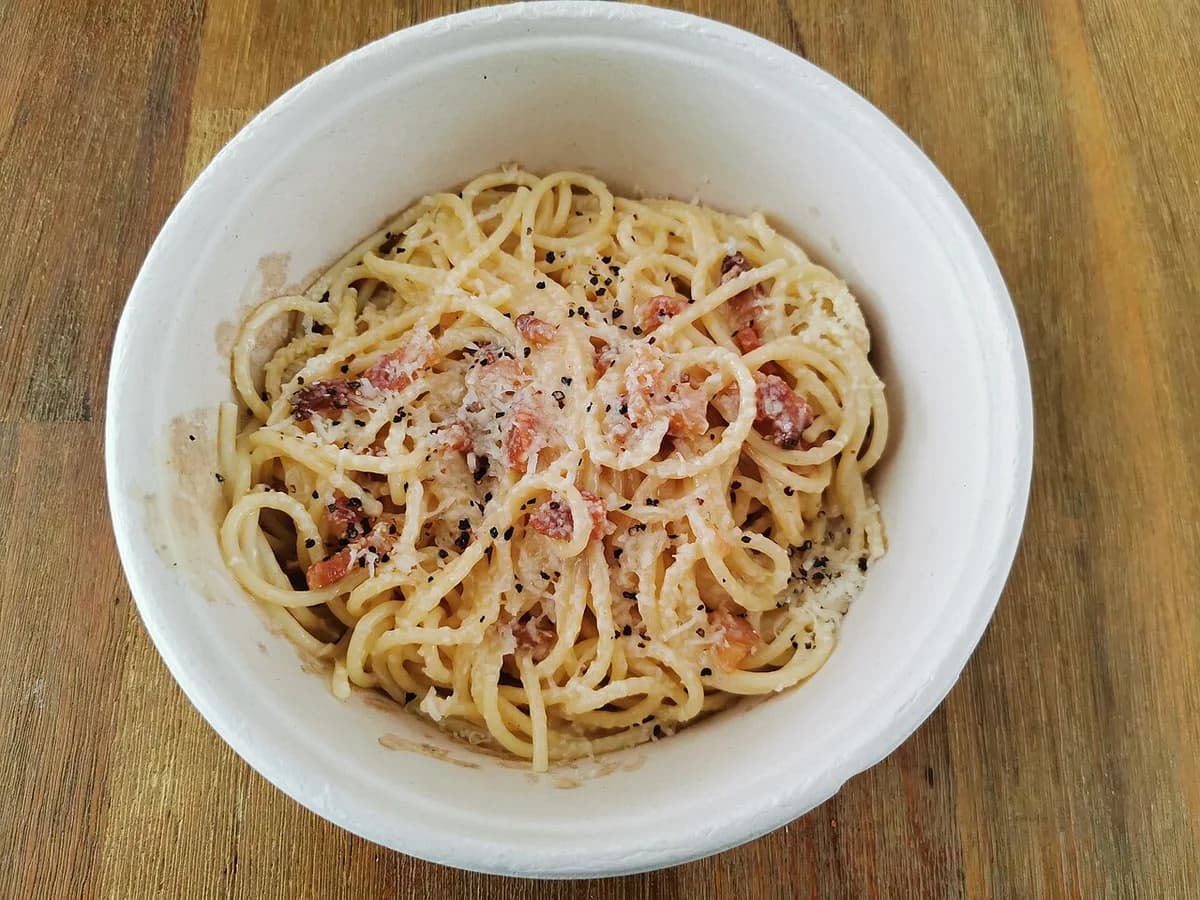
Estimated calories and US ingredient costs.
For 4 servings, use a 12- to 14-inch skillet and a large mixing bowl so the pasta can be tossed vigorously without cooling too fast. Keep the egg-cheese mixture in a bowl large enough to hold all the spaghetti, and scale the guanciale and pasta in proportion. Do not increase the heat to speed things up; carbonara thickens through tossing and residual heat, not boiling. The sauce may need a little extra hot pasta water as you scale because more pasta surface area absorbs and carries more liquid.
Your whole cook, in one place.
Ingredients, steps and a live timeline. Ready for 2 people.
Step timeline
Cooking order
7 leftSet up the sauce base
~3 minSet up the sauce base.
Bring 16 cups water to a boil in a 6-quart pot.
While it heats, whisk 2 large eggs, 1 large egg yolk, 2 oz of the Pecorino Romano, and 1 tsp of the black pepper in a medium mixing bowl until smooth and thick.
Set the remaining 1/2 oz cheese and remaining 1/2 tsp pepper aside for finishing.
Ingredients
- 16 cupsWater
- 2Large eggs
- 1Large egg yolk
- 1 tsp + 1/2 tspFreshly ground black pepper
Render the guanciale
~10 minRender the guanciale.
Place the 4 oz guanciale in a cold 12-inch skillet, then set it over medium-low heat.
Cook for 8 to 10 minutes, stirring often, until the fat has rendered and the pieces are crisp at the edges but not hard.
Lower the heat if the fond starts to darken too quickly; you want deep savory browning, not burnt bits.
Cook and drain the spaghetti
~1 minCook and drain the spaghetti.
Stir 1 tbsp of the fine sea salt into the boiling water, then add the 6 oz dried spaghetti.
Cook until just shy of package al dente, usually 1 minute less than the box suggests.
Reserve 1 cup of the starchy cooking water, then drain the pasta.
Do not rinse it, since the surface starch helps the sauce cling.
Ingredients
- 16 cups total for recipeWater
- 1 tbspFine sea salt
- 6 ozDried spaghetti

Coat the pasta with rendered fat
~1 minCoat the pasta with rendered fat.
Add the drained spaghetti to the skillet with the guanciale and toss over low heat for 30 to 45 seconds.
Add 1/4 cup of the reserved hot pasta water and keep tossing so the noodles pick up the rendered fat and loosen any browned bits from the pan.
The pasta should look glossy, not soupy.
Ingredients
- 16 cups total for recipeWater
- 6 oz total for recipeDried spaghetti
Build the carbonara emulsion
~3 minBuild the carbonara emulsion.
Remove the skillet from the heat completely.
Pour in the egg-cheese mixture while tossing constantly with tongs or two forks so the sauce emulsifies instead of scrambling.
Add more reserved pasta water 1 tbsp at a time until the sauce turns creamy, coats the strands, and leaves a light sheen in the bottom of the pan.
If it tightens too fast, keep tossing and add another splash of water off heat.
Ingredients
- 16 cups total for recipeWater
Plate and finish
~3 minTop with the remaining Pecorino Romano and the remaining 1/2 tsp black pepper
If the pasta sits too long, it will thicken quickly, so bring the bowls to the table right away.
Ingredients
- 1/2 tspFreshly ground black pepper
Serve meal
~1 minOnce all dishes are cooked and ready, plate and serve the meal together.
Spaghetti carbonara: Plate and finish.
Spaghetti carbonara: Divide the spaghetti carbonara between warm bowls.
Spaghetti carbonara: then serve immediately while the sauce is still loose and glossy.
Make the next one yours.
Create a custom meal with what you have.
Read the traditional recipe
Ingredients
For 2 people
- 16 cups water
- 1 tbsp fine sea salt
- 6 oz dried spaghetti
- 4 oz guanciale, cut into 1/4-inch lardons
- 2 large eggs
- 1 large egg yolk
- 2 1/2 oz Pecorino Romano, finely grated
- 1 1/2 tsp freshly ground black pepper
Method
- Set up the sauce baseBring 16 cups water to a boil in a 6-quart pot. While it heats, whisk 2 large eggs, 1 large egg yolk, 2 oz of the Pecorino Romano, and 1 tsp of the black pepper in a medium mixing bowl until smooth and thick. Set the remaining 1/2 oz cheese and remaining 1/2 tsp pepper aside for finishing.
- Render the guancialePlace the 4 oz guanciale in a cold 12-inch skillet, then set it over medium-low heat. Cook for 8 to 10 minutes, stirring often, until the fat has rendered and the pieces are crisp at the edges but not hard. Lower the heat if the fond starts to darken too quickly; you want deep savory browning, not burnt bits.
- Cook and drain the spaghettiStir 1 tbsp of the fine sea salt into the boiling water, then add the 6 oz dried spaghetti. Cook until just shy of package al dente, usually 1 minute less than the box suggests. Reserve 1 cup of the starchy cooking water, then drain the pasta. Do not rinse it, since the surface starch helps the sauce cling.
- Coat the pasta with rendered fatAdd the drained spaghetti to the skillet with the guanciale and toss over low heat for 30 to 45 seconds. Add 1/4 cup of the reserved hot pasta water and keep tossing so the noodles pick up the rendered fat and loosen any browned bits from the pan. The pasta should look glossy, not soupy.
- Build the carbonara emulsionRemove the skillet from the heat completely. Pour in the egg-cheese mixture while tossing constantly with tongs or two forks so the sauce emulsifies instead of scrambling. Add more reserved pasta water 1 tbsp at a time until the sauce turns creamy, coats the strands, and leaves a light sheen in the bottom of the pan. If it tightens too fast, keep tossing and add another splash of water off heat.
- Plate and finishDivide the spaghetti carbonara between warm bowls. Top with the remaining Pecorino Romano and the remaining 1/2 tsp black pepper, then serve immediately while the sauce is still loose and glossy. If the pasta sits too long, it will thicken quickly, so bring the bowls to the table right away.
Before you cook
What to get ready
Large pasta pot, colander, wide sauce pan, tongs and a mug for reserved cooking water.
Finely grate Pecorino and whisk the egg mixture before draining; use pasteurized eggs for a sauce not heated to 160°F.
If something needs adjusting
Egg sauce scrambles
Take the pan off direct heat before combining; toss continuously and loosen with warm pasta water.
Sauce tightens after tossing
Add reserved pasta water a spoonful at a time while tossing. Serve promptly because pasta continues absorbing liquid.
Store for later
Refrigerate pasta promptly in shallow containers. Reheat to 165°F with a small splash of water; keep uncooked cheese or herb toppings separate when possible.
Refrigerate perishables within 2 hours, or 1 hour above 90°F. Keep the fridge at 40°F or below; use refrigerated leftovers within 3–4 days. USDA storage and reheating guidance.
Make the ingredients go further
Freeze remaining guanciale in portions for amatriciana.
Next use for your ingredients: Bucatini amatriciana →
Calculate this meal with your own prices →
Cooking notes updated October 24, 2026. How we create recipes.
Tips, swaps and questions
A little kitchen know-how
Grate the Pecorino Romano very finely so it melts into the egg mixture instead of clumping. A microplane or the smallest side of a box grater works best. If your sauce starts to look grainy, take the pan fully off the heat and add a spoonful of hot pasta water while tossing; the extra moisture usually brings it back to a smooth, glossy finish.
Make it work for you
If you cannot find guanciale, use 4 oz diced pancetta and render it the same way, but reduce any added salt because pancetta can be saltier and leaner. Bacon will work too, though it adds a smoky flavor that is less traditional and may need a little more pasta water to keep the sauce from feeling heavy.
Use more of your guanciale and Pecorino Romano in bucatini amatriciana.
Why did my carbonara turn scrambled or grainy?
The pan was likely too hot or the pasta was too dry when the egg mixture went in. Take the skillet fully off the heat before adding the eggs, toss constantly, and use hot reserved pasta water in small splashes to keep the sauce flowing. Finely grated cheese also helps the emulsion stay smooth.
Times are estimates. Check ingredients for allergens. For safe temperatures and storage, see FoodSafety.gov.