Turkey gravy
A classic pan gravy made from turkey drippings, butter, flour, and stock. This recipe yields about 2 cups, enough for 4 servings, with a smooth, savory texture and a light roasted flavor. It works best with strained drippings from roast turkey, but the method also handles a mostly butter-and-stock version if your pan drippings are scant.
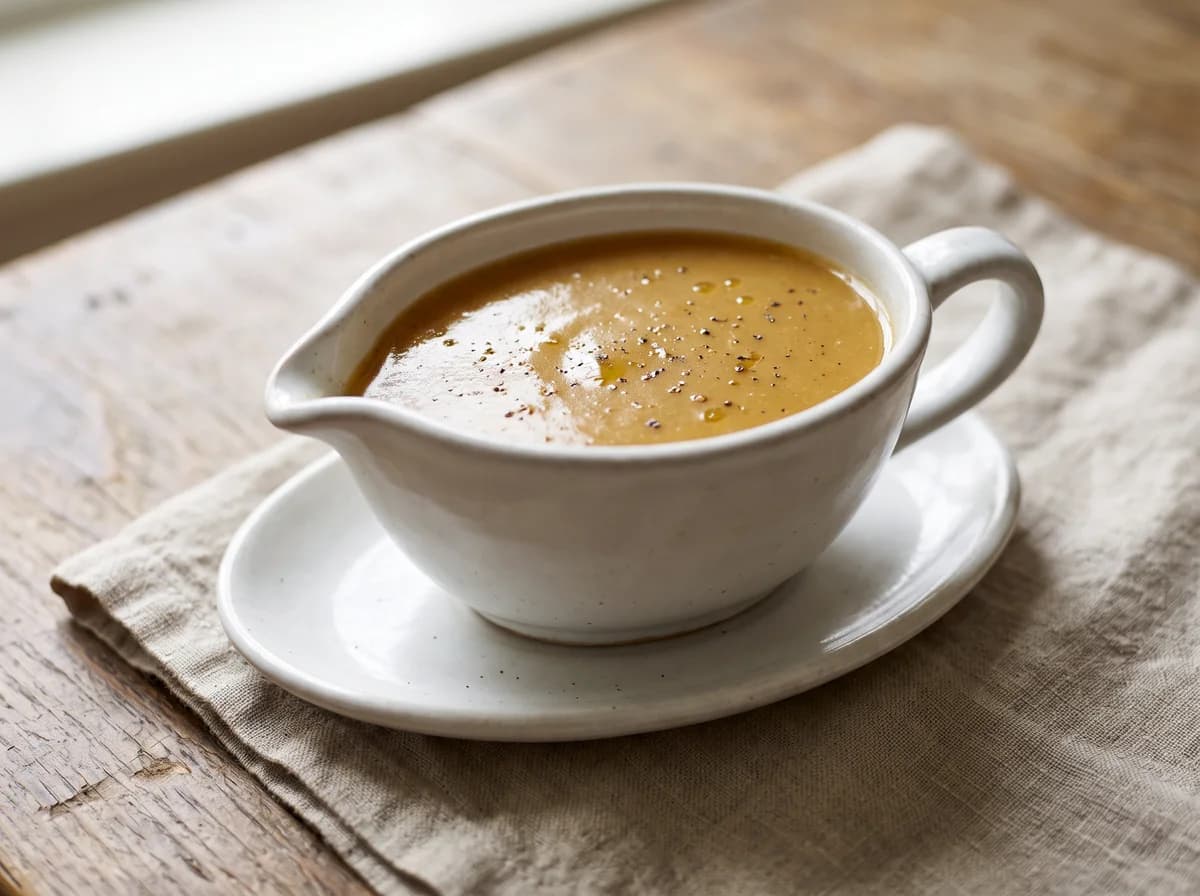
Estimated calories and US ingredient costs.
This gravy scales well, but use a wider saucepan when doubling so the roux cooks evenly and the whisk has room to move. If you make a larger batch, keep the same medium heat and simmer time, then adjust thickness with a little more stock rather than changing the flour ratio. Reheat gently and whisk in a splash of stock if it tightens after cooling. Calories are approximate and assume the drippings are fat-rich; if your drippings are mostly liquid juices, the total will be lower.
Your whole cook, in one place.
Ingredients, steps and a live timeline. Ready for 4 people.
Step timeline
Cooking order
7 leftStrain and measure the drippings
~3 minStrain and measure the drippings.
Pour at least 2 tbsp of hot turkey pan drippings through a fine-mesh sieve into a heatproof measuring cup.
Let the fat rise for a minute, then measure 2 tbsp of the strained drippings or fat for the gravy.
If your roasting pan did not leave enough drippings, use the measured butter in the next step to make up the richness.
Ingredients
- 2 tbsp total for recipeTurkey drippings or turkey fat, strained
- 2 tbsp total for recipeUnsalted butter

Make the roux
~2 minMake the roux.
Set a medium saucepan over medium heat and add the 2 tbsp turkey drippings or turkey fat and 2 tbsp unsalted butter.
When the butter melts, whisk in 3 tbsp all-purpose flour.
Cook, whisking constantly, for 1 to 2 minutes until the mixture looks smooth, foamy, and light tan.
Do not let it darken too much or the gravy will taste overly nutty and lose the clean turkey flavor.
Ingredients
- 2 tbspTurkey drippings or turkey fat, strained
- 2 tbspUnsalted butter
- 3 tbspAll-purpose flour
Whisk in the stock gradually
~1 minWhisk in the stock gradually.
Slowly pour in 1 3/4 cups low-sodium turkey stock while whisking hard to prevent lumps.
Add the first splash in a thin stream and whisk until the paste loosens before adding more.
Keep the saucepan over medium heat and bring the mixture to a gentle simmer.
Ingredients
- 1 3/4 cupsLow-sodium turkey stock
Simmer to thicken
~5 minSimmer to thicken.
Cook the gravy for 3 to 5 minutes, whisking often, until it lightly coats the back of a spoon.
If it seems too thick, whisk in a splash of extra stock or water; if it seems thin, continue simmering for another minute or two.
The gravy should look glossy and smooth, not pasty.
Season and finish
~120 min cookSeason and finish.
Whisk in 1/4 tsp kosher salt and 1/4 tsp black pepper.
Taste and adjust only if needed, keeping in mind that the stock and drippings may already be salty.
Strain the gravy again for an especially smooth finish
Refrigerate leftovers within 2 hours in a covered container.
Ingredients
- 1/4 tspKosher salt
- 1/4 tspBlack pepper, freshly ground
Check the dish
After ~120 minCheck Turkey gravy and continue when ready.
Serve meal
~1 minOnce all dishes are cooked and ready, plate and serve the meal together.
Turkey gravy: then serve it warm over sliced turkey, stuffing, or mashed potatoes.
Make the next one yours.
Create a custom meal with what you have.
Read the traditional recipe
Ingredients
For 4 people
- 2 tbsp turkey drippings or turkey fat, strained
- 2 tbsp unsalted butter
- 3 tbsp all-purpose flour
- 1 3/4 cups low-sodium turkey stock
- 1/4 tsp kosher salt
- 1/4 tsp black pepper, freshly ground
Method
- Strain and measure the drippingsPour at least 2 tbsp of hot turkey pan drippings through a fine-mesh sieve into a heatproof measuring cup. Let the fat rise for a minute, then measure 2 tbsp of the strained drippings or fat for the gravy. If your roasting pan did not leave enough drippings, use the measured butter in the next step to make up the richness.
- Make the rouxSet a medium saucepan over medium heat and add the 2 tbsp turkey drippings or turkey fat and 2 tbsp unsalted butter. When the butter melts, whisk in 3 tbsp all-purpose flour. Cook, whisking constantly, for 1 to 2 minutes until the mixture looks smooth, foamy, and light tan. Do not let it darken too much or the gravy will taste overly nutty and lose the clean turkey flavor.
- Whisk in the stock graduallySlowly pour in 1 3/4 cups low-sodium turkey stock while whisking hard to prevent lumps. Add the first splash in a thin stream and whisk until the paste loosens before adding more. Keep the saucepan over medium heat and bring the mixture to a gentle simmer.
- Simmer to thickenCook the gravy for 3 to 5 minutes, whisking often, until it lightly coats the back of a spoon. If it seems too thick, whisk in a splash of extra stock or water; if it seems thin, continue simmering for another minute or two. The gravy should look glossy and smooth, not pasty.
- Season and finishWhisk in 1/4 tsp kosher salt and 1/4 tsp black pepper. Taste and adjust only if needed, keeping in mind that the stock and drippings may already be salty. Strain the gravy again for an especially smooth finish, then serve it warm over sliced turkey, stuffing, or mashed potatoes. Refrigerate leftovers within 2 hours in a covered container.
Before you cook
What to get ready
Saucepan, whisk, measuring jug and fine strainer.
Strain drippings and separate fat from juices before measuring the roux ingredients.
If something needs adjusting
Gravy has lumps
Whisk stock in gradually and simmer while whisking; strain persistent lumps before serving.
Sauce is too thick after standing
Whisk in warm stock or water a little at a time. Adjust salt only after reaching the intended consistency.
Store for later
Refrigerate gravy promptly in a shallow covered container. Reheat to 165°F while whisking; add a little water or stock if it has thickened.
Refrigerate perishables within 2 hours, or 1 hour above 90°F. Keep the fridge at 40°F or below; use refrigerated leftovers within 3–4 days. USDA storage and reheating guidance.
Make the ingredients go further
Freeze extra unsalted stock in measured portions for future gravy.
Next use for your ingredients: Chicken pot pie →
Calculate this meal with your own prices →
Cooking notes updated October 24, 2026. How we create recipes.
Tips, swaps and questions
A little kitchen know-how
If your drippings are very fatty, chill or spoon off excess fat before measuring so the gravy does not become greasy. If you only have a small amount of drippings, use the full 2 tbsp listed here and rely on the butter plus stock for body. A brief strain at the end gives the smoothest holiday-style texture.
Make it work for you
For a slightly different flavor, replace up to 1 cup of the stock with unsalted chicken stock. If you need a gluten-free version, use 2 tbsp cornstarch mixed with 2 tbsp cold stock instead of the flour, then simmer just until thickened. That version thickens faster and can turn glossy but slightly less silky than a roux-based gravy.
Use more of your all-purpose flour in apple cobbler.
Why did my turkey gravy turn lumpy?
Lumps usually happen when the stock is added too fast or the roux is too dry. Whisk in the first splash of stock slowly until the flour paste loosens, then add the rest in a steady stream. If lumps do form, whisk vigorously or strain the finished gravy through a fine-mesh sieve before serving.
Times are estimates. Check ingredients for allergens. For safe temperatures and storage, see FoodSafety.gov.