Salmon pasta with peas
Tender salmon flakes into a lemony pasta with sweet peas, shallot, and a light cream sauce. This makes 2 generous servings and comes together in one pot plus a skillet, with the pasta finished in the sauce so the starch helps it cling.
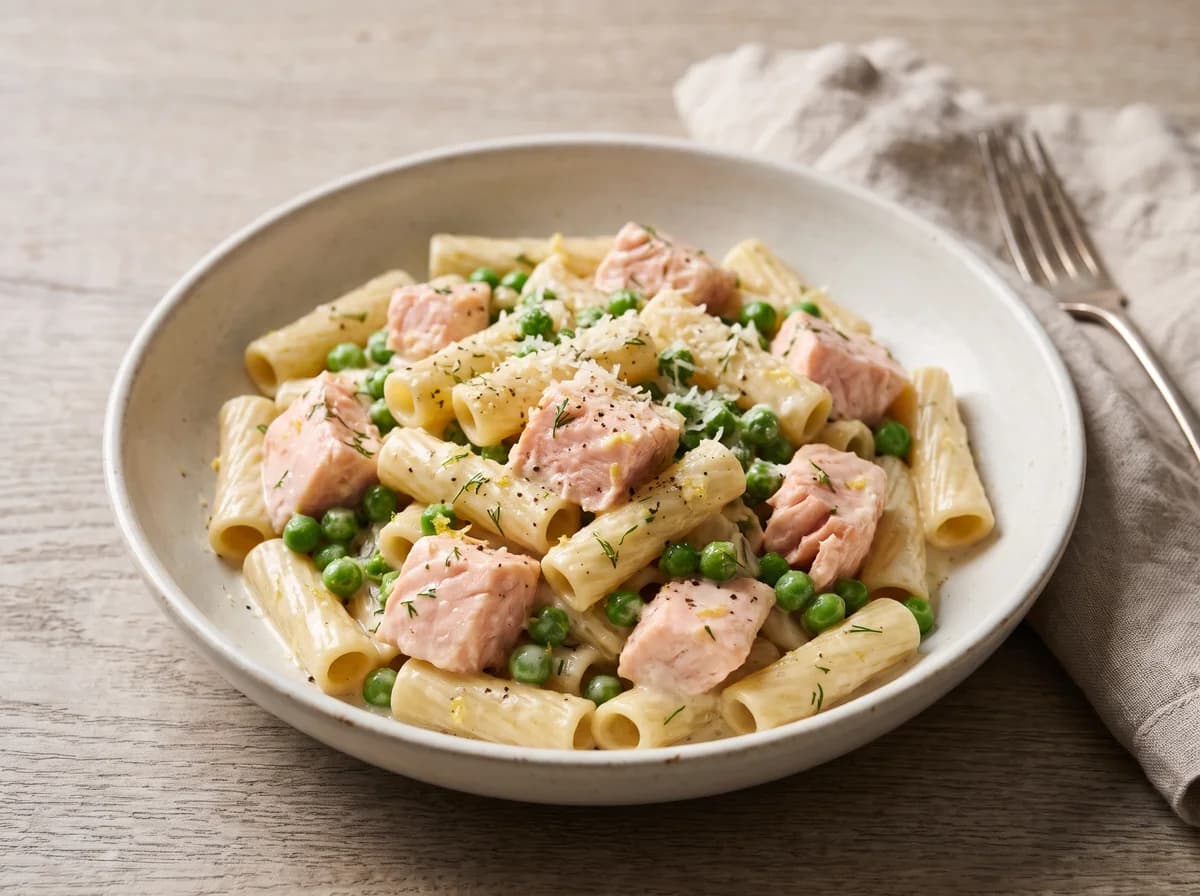
Estimated calories and US ingredient costs.
For 4 servings, use a 12-inch skillet and a 4-quart pot; for 6 or more, cook the pasta in batches if your pot is small so it does not clump. Keep the salmon searing surface roomy so it browns instead of steaming, and add extra reserved pasta water only a tablespoon at a time to maintain a glossy sauce.
Your whole cook, in one place.
Ingredients, steps and a live timeline. Ready for 2 people.
Step timeline
Cooking order
9 leftBoil the pasta
~10 min cookBoil the pasta.
Bring a medium pot of salted water to a boil and cook the 6 oz dry short pasta until just al dente, about 8 to 10 minutes depending on the shape.
Before draining, reserve 1/2 cup of the starchy pasta water
Ingredients
- 6 oz total for recipeDry short pasta, such as fusilli or rigatoni
Drain the pasta and keep it nearby so it can…
After ~10 minDrain the pasta and keep it nearby so it can go straight into the sauce.
Sear the salmon
~4 minSear the salmon.
While the pasta cooks, pat the 8 oz salmon pieces dry and season them with 1/8 tsp of the salt and the black pepper.
Heat 1 tbsp olive oil in a large skillet over medium-high heat.
Add the salmon in a single layer and cook for 1 to 2 minutes per side until lightly browned and the thickest pieces reach 145°F.
Ingredients
- 6 oz total for recipeDry short pasta, such as fusilli or rigatoni
- 8 ozSalmon fillet, skin removed and cut into 1-inch pieces
- 1 tbspOlive oil
- 1/8 tspKosher salt
- 1/8 tsp total for recipeBlack pepper
Build the aromatic base
~4 minBuild the aromatic base.
Reduce the skillet to medium heat and add 1 tbsp unsalted butter.
Stir in the 1 oz minced shallot and cook for 2 to 3 minutes until softened and translucent, scraping up any browned bits from the salmon.
Add the 1 tsp garlic and cook for 30 seconds, just until fragrant so it does not brown.
Ingredients
- 1 tbspUnsalted butter
- 1 tspGarlic

Make the sauce
~4 minMake the sauce.
Pour in the 1/2 cup chicken broth and simmer for 1 minute, then add the 1/2 cup heavy cream, 1 tbsp lemon juice, 1 tsp lemon zest, remaining 1/8 tsp salt, and 1/8 tsp black pepper.
Stir in the 1 cup frozen peas and cook 2 to 3 minutes until the peas are hot and the sauce lightly coats the back of a spoon.
If it looks too tight, loosen with a splash of reserved pasta water.
Ingredients
- 1 cupFrozen peas
- 1/8 tspKosher salt
- 1/8 tspBlack pepper
- 1/2 cupHeavy cream
- 1/2 cupLow-sodium chicken broth
- 1 tbspLemon juice
- 1 tspLemon zest

Toss in the pasta
~2 minToss in the pasta.
Add the drained pasta to the skillet and toss over medium-low heat for 1 to 2 minutes so the noodles absorb the sauce.
The sauce should look glossy and lightly clingy, not soupy; add a little more reserved pasta water only if needed to help it emulsify.
Ingredients
- 6 oz total for recipeDry short pasta, such as fusilli or rigatoni
Return the salmon
~1 minReturn the salmon.
Gently fold the seared salmon and any juices from the plate into the pasta.
Cook for about 1 minute more, just until the salmon is warmed through and flakes into large pieces without breaking apart completely.
Ingredients
- 8 oz total for recipeSalmon fillet, skin removed and cut into 1-inch pieces
Finish and serve
~1 minFinish
Turn off the heat and stir in the 2 tbsp chopped fresh dill and 2 tbsp grated Parmesan cheese.
Taste the sauce and adjust only with the ingredients already measured if needed by letting the pasta sit off heat for 1 minute to thicken naturally.
Ingredients
- 6 oz total for recipeDry short pasta, such as fusilli or rigatoni
- 2 tbspFresh dill
- 2 tbspGrated Parmesan cheese
Serve meal
~1 minOnce all dishes are cooked and ready, plate and serve the meal together.
Salmon pasta with peas: Transfer to a plate; it will finish gently in the sauce.
Salmon pasta with peas: serve.
Salmon pasta with peas: Divide into bowls
Salmon pasta with peas: serve right away while the sauce is silky and the salmon is still delicate.
Make the next one yours.
Create a custom meal with what you have.
Read the traditional recipe
Ingredients
For 2 people
- 6 oz dry short pasta, such as fusilli or rigatoni
- 8 oz salmon fillet, skin removed and cut into 1-inch pieces
- 1 cup frozen peas
- 1 tbsp olive oil
- 1 tbsp unsalted butter
- 1 oz shallot, finely minced
- 1 tsp minced garlic
- 1/4 tsp kosher salt
- 1/8 tsp black pepper
- 1/2 cup heavy cream
- 1/2 cup low-sodium chicken broth
- 1 tbsp lemon juice
- 1 tsp lemon zest
- 2 tbsp chopped fresh dill
- 2 tbsp grated Parmesan cheese
Method
- Boil the pastaBring a medium pot of salted water to a boil and cook the 6 oz dry short pasta until just al dente, about 8 to 10 minutes depending on the shape. Before draining, reserve 1/2 cup of the starchy pasta water. Drain the pasta and keep it nearby so it can go straight into the sauce.
- Sear the salmonWhile the pasta cooks, pat the 8 oz salmon pieces dry and season them with 1/8 tsp of the salt and the black pepper. Heat 1 tbsp olive oil in a large skillet over medium-high heat. Add the salmon in a single layer and cook for 1 to 2 minutes per side until lightly browned and the thickest pieces reach 145°F. Transfer to a plate; it will finish gently in the sauce.
- Build the aromatic baseReduce the skillet to medium heat and add 1 tbsp unsalted butter. Stir in the 1 oz minced shallot and cook for 2 to 3 minutes until softened and translucent, scraping up any browned bits from the salmon. Add the 1 tsp garlic and cook for 30 seconds, just until fragrant so it does not brown.
- Make the saucePour in the 1/2 cup chicken broth and simmer for 1 minute, then add the 1/2 cup heavy cream, 1 tbsp lemon juice, 1 tsp lemon zest, remaining 1/8 tsp salt, and 1/8 tsp black pepper. Stir in the 1 cup frozen peas and cook 2 to 3 minutes until the peas are hot and the sauce lightly coats the back of a spoon. If it looks too tight, loosen with a splash of reserved pasta water.
- Toss in the pastaAdd the drained pasta to the skillet and toss over medium-low heat for 1 to 2 minutes so the noodles absorb the sauce. The sauce should look glossy and lightly clingy, not soupy; add a little more reserved pasta water only if needed to help it emulsify.
- Return the salmonGently fold the seared salmon and any juices from the plate into the pasta. Cook for about 1 minute more, just until the salmon is warmed through and flakes into large pieces without breaking apart completely.
- Finish and serveTurn off the heat and stir in the 2 tbsp chopped fresh dill and 2 tbsp grated Parmesan cheese. Taste the sauce and adjust only with the ingredients already measured if needed by letting the pasta sit off heat for 1 minute to thicken naturally. Divide into bowls and serve right away while the sauce is silky and the salmon is still delicate.
Before you cook
What to get ready
Large pasta pot, colander, wide sauce pan, tongs and a mug for reserved cooking water.
Cut salmon into equal pieces and set cooked fish aside while building the cream sauce.
If something needs adjusting
Salmon breaks into tiny flakes
Fold it back at the end with a broad spoon instead of stirring vigorously.
Sauce tightens after tossing
Add reserved pasta water a spoonful at a time while tossing. Serve promptly because pasta continues absorbing liquid.
Store for later
Refrigerate pasta promptly in shallow containers. Reheat to 165°F with a small splash of water; keep uncooked cheese or herb toppings separate when possible.
Refrigerate perishables within 2 hours, or 1 hour above 90°F. Keep the fridge at 40°F or below; use refrigerated leftovers within 3–4 days. USDA storage and reheating guidance.
Make the ingredients go further
Use the rest of the frozen peas in fried rice.
Next use for your ingredients: Vegetable and egg fried rice →
Calculate this meal with your own prices →
Cooking notes updated October 24, 2026. How we create recipes.
Tips, swaps and questions
A little kitchen know-how
Use a short pasta with ridges or twists so the cream sauce and peas stay trapped in the grooves. If your salmon is very thick, sear it briefly and let the sauce finish the center so it stays moist; overcooked salmon turns dry quickly in a pasta dish.
Make it work for you
Swap dill for chopped parsley or chives if you want a milder herb profile, and use half-and-half instead of heavy cream for a lighter sauce. If you replace the broth with vegetable broth, keep an eye on salt because Parmesan and broth together can make the finished pasta taste more seasoned than expected.
Use more of your peas and heavy cream in turkey tetrazzini.
Can I use leftover cooked salmon?
Yes. Flake 8 oz cooked salmon into bite-size pieces and add it at the very end with the dill and Parmesan, just long enough to warm through. Do not simmer it in the sauce, or it can turn dry and grainy. The rest of the recipe stays the same.
Times are estimates. Check ingredients for allergens. For safe temperatures and storage, see FoodSafety.gov.